
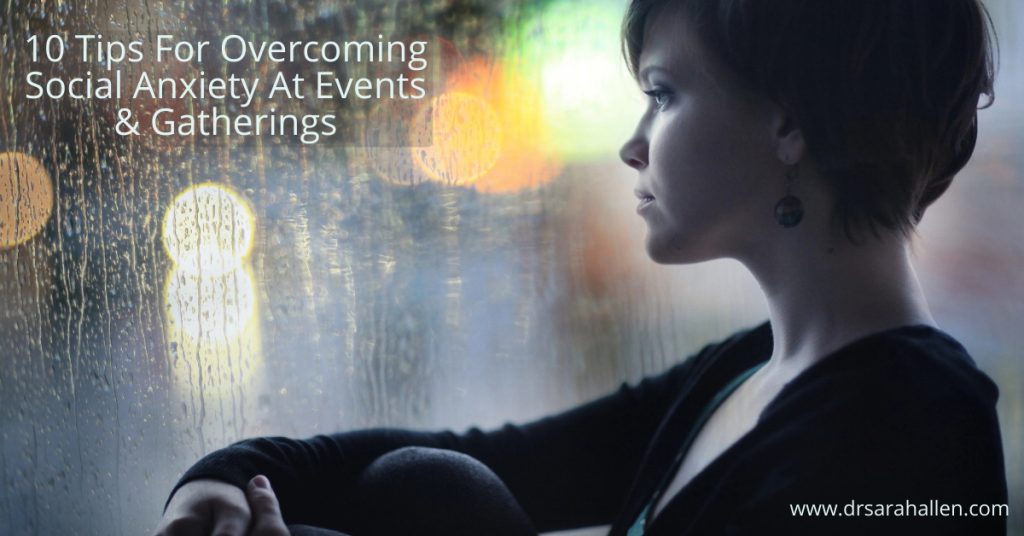
Social situations can bring up strong feelings of anxiety. I often hear from people who say that even thinking about going to a work event, social get together or meeting someone new makes their heart race. For some, the hardest part is just getting out the door. Others feel fine until it’s their turn to speak, and then they freeze. Over the years, I’ve seen this kind of anxiety show up in so many ways and how personal and exhausting it can feel.
Social anxiety and shyness are not the same thing. Shyness might make you feel timid or uncomfortable for a few minutes, but that usually fades. Social anxiety digs deeper, showing up in your thoughts long before the event begins and sometimes following you well after it’s over. Your body might tense, your stomach might ache, your mind may replay every conversation from the entire evening. That can make it feel even more important to understand and manage these anxious feelings.
Understanding Social Anxiety and How It Differs from Shyness
Social anxiety isn’t about being quiet or shy. It’s a deep worry about being judged or embarrassed, even during simple, everyday moments like standing in a line, ordering takeout, or answering a question in a group. Social anxiety can show up as racing thoughts, sweating, shaky hands, or a pounding heart. Sometimes it’s about the fear of saying the wrong thing; sometimes it’s the idea that everyone is watching and making silent judgments.
Shyness usually fades as you settle in, but social anxiety tends to stick. I’ve seen my clients avoid events entirely because the anxiety felt too heavy to carry. One pattern I notice is the way people talk to themselves before a social event. There’s usually a loud inner critic predicting the worst outcome, replaying past awkward moments, or worrying about not fitting in. That inner dialogue is hard to quiet and makes the build-up to even simple events feel overwhelming.
Why Social Situations Trigger Anxiety
There’s more than one reason social settings bring up these feelings. A fear of judgment comes up a lot. Even casual conversations can feel loaded, as if every word is being evaluated. Some people prepare everything they plan to say in advance or avoid interaction altogether.
Overthinking adds another layer. I remember a client who stayed up the entire night before a work dinner just worrying about what to wear and how to answer basic questions. Even though she knew the others were friendly, her mind still jumped to every possible awkward thing that could happen. When fear takes over, it moves faster and louder than logic, so it’s not only the event that’s hard, but the whole day leading up to it is tough too.
Common Social Anxiety Triggers
Some situations come up far more often than others. Here are the triggers I hear about the most:
– Meeting new people, especially when arriving alone without a familiar face close by. It isn’t just nerves, it’s the worry about making a mistake, being judged, or struggling with what to say next.
– Speaking up, even in smaller meetings or relaxed gatherings. One client told me that work introductions were the hardest, not because she didn’t want to be there, but because she felt a lot of pressure to say something “smart” and would freeze up.
– Being called on suddenly (like during check-ins or intros) or ending up in the spotlight. This can turn into a physical reaction, whether it’s during a parent group or introducing yourself at a kid’s birthday party.
These responses are much more common than most people realize. I see how hard people are on themselves about their reactions. I always remind them that these feelings do not have to stay locked in forever.
10 Simple Tips That Can Help Social Anxiety
Over time, I’ve shared lots of strategies with my clients to help reduce social anxiety. Here are some of the ones that have work the best:
1. Set just one small goal for each event. For example, decide to say hello to one person, or aim to stay for 30 minutes. Every little step is progress.
2. Try a quiet grounding technique, like pressing your toes into the floor or holding a smooth stone in your hand. It can bring your attention back to the present moment.
3. Prepare three simple conversation starters ahead of time, like “How do you know the host?” or “Do you live in the area?” This takes some of the pressure off during the start of a talk.
4. Arrive early rather than late. Walking into a smaller crowd is easier and allows you to take your time settling in.
5. Go easy on caffeine and sugar before events, since these can make nerves worse and your body feel even jumpier.
6. Turn your attention outwards. Listen closely to what others are saying so your brain doesn’t get stuck in self-checking mode.
7. Change self-talk on purpose. Instead of telling yourself, “I am so awkward,” try saying, “I am doing my best today.” Self-kindness matters.
8. Use a simple breathing trick: breathe in for four counts, hold, then breathe out for four. Repeat this a few times if you need to calm yourself before or during the event.
9. Stay off social media before you go. Comparing yourself to others can bring on more self-doubt.
10. Give yourself permission to leave early or take breaks if you need them. The biggest goal is showing up and honoring your limits, not pushing through until you feel worse.
I’ve witnessed small habits like these change how people feel over time. All of these tips are general so please adapt to your own unique comfort zone.
When It’s Time To Ask for Help
Sometimes anxiety grows until it becomes hard to handle alone, especially when it gets in the way of daily routines or relationships. Feeling nervous about a night out is one thing, but when it becomes a pattern to cancel plans, avoid eye contact, or get sick before social events, it can become more than just discomfort. That’s when reaching out makes sense.
Some people feel like, no matter how hard they try, anxiety just keeps getting in the way. They want to connect but feel stuck. My approach helps slow down swirling thoughts, shift old patterns, and build confidence gradually, step by step. The process doesn’t always happen quickly, but small, honest shifts can add up.
Working together, I witness clients begin to reclaim enjoyment in moments that used to feel too difficult to manage. My office in Northbrook offers a private and welcoming place to talk about your struggles, and I provide virtual sessions for clients across Illinois, Florida, and the UK.
Feeling More Confident in Social Situations
Social anxiety does not have to stop you doing anything or define your confidence. While there’s no overnight solution, the steps you take now can shift future interactions for the better. I’ve seen people challenge their fears, bit by bit, and reconnect with their own strengths. Progress looks different for everyone, but understanding your triggers and practicing new responses is always valuable. There’s strength in meeting anxiety directly, one choice at a time.
If social gatherings, meetings, or everyday conversations have started to feel overwhelming, you’re not alone. I’ve supported many people who felt that tension take over in moments that were supposed to feel simple. Change doesn’t happen overnight, but with the right support, social situations can start to feel a little easier. I offer focused help to those seeking anxiety counseling. For personalized anxiety (or one of the other issues I treat) treatment, contact me below. If you would like to read more about my training and areas of expertise see my bio Dr. Sarah Allen. I see clients in my office in Northbrook, a North Shore Chicago suburb, or virtually across IL, FL and the UK.

If you have any questions, or would like to set up an appointment to work with me and learn how to reduce anxiety, please contact me at 847 791-7722 or on the form below.
If you would like to read more about me and my areas of specialty, please visit Dr. Sarah Allen Bio.
Dr. Allen’s professional licenses only allow her to work with clients who live in IL, FL & the UK and unfortunately does not allow her to give personalized advice via email to people who are not her clients.
Dr. Allen sees clients in person in her Northbrook, IL office or remotely via video or phone.

What Can I Read That Helps Me While I Am Waiting For My First Appointment With Sarah?
Download this free booklet to gain valuable insights and practical strategies for managing anxiety and worrying.













As featured in