
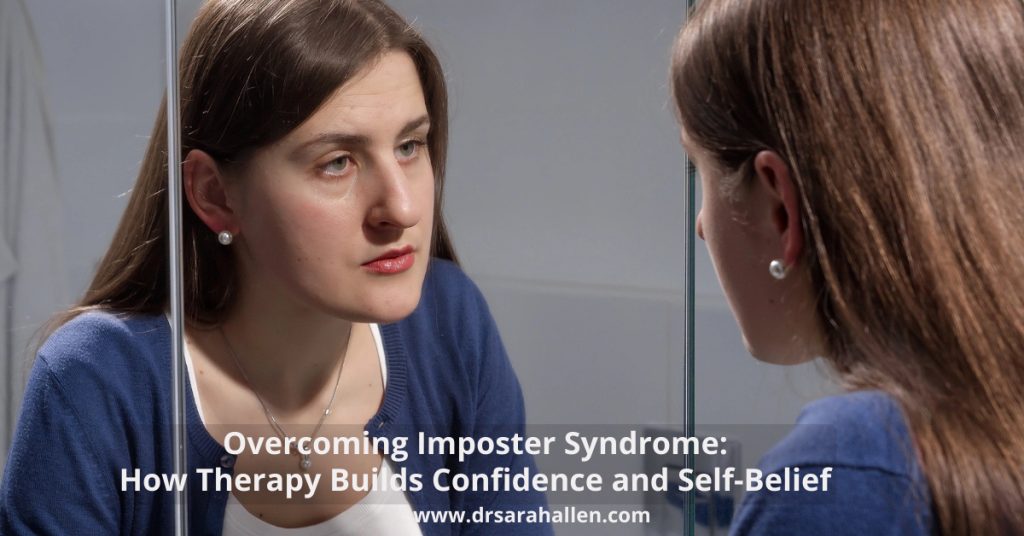
Imposter syndrome comes from the voice that tells you you are not good enough, even when you accomplish something meaningful. I have sat with so many women over the years who arrive in sessions doubting themselves. You get the job, raise children, handle responsibilities, and still wonder whether you really earned your place and that at some point you will be “found out”. For many women I work with, especially those juggling work, parenting, and personal expectations, the anxiety behind that doubt can be exhausting.
It is important to realize that imposter syndrome is not about lacking ability. It is about questioning your worth, no matter how much you have proven yourself. When that questioning becomes constant, it can cause real emotional overwhelm. I have watched how it slips quietly into a spiral of self-doubt that is tough to stop on your own.
What Imposter Syndrome Looks Like for Women
Imposter syndrome shows up in different ways for different women and it isn’t in every aspect of their life. Some feel it most at work. I have seen clients in leadership roles who deliver results every day, yet still feel they have somehow fooled everyone around them. Working moms often share that it feels impossible to be present both at home and at work, and that they are falling short in both places. Say-at-home moms worry they do not have the same “value” since deciding to not work as they are not earning a paycheck, even though they are handling the physical demands and the emotional load of the household.
These thoughts often sound like, “It was just luck” or “Anyone could have done this better.” Over time, that kind of commentary becomes hard to silence. I have found that a big part of recovering from imposter syndrome is simply noticing how often you discredit yourself and what you have achieved.
What I have learned is that these thoughts are rarely based on facts. They usually come from harsh standards or the fear of being seen as not enough. If you are always waiting for someone to call you out or question your ability, it is difficult to feel confident and secure in your own skin.
When Motherhood and Imposter Syndrome Overlap
Motherhood can add a new layer to all these feelings. I have worked with many pregnant and new moms who second-guess everything they do. They wonder if they are doing it right, if others are handling things better, or if their worry means something is wrong with them and they convince themselves that they are failing.
Social pressure and family opinions can make it worse. For example, if someone comments on how a mom feeds her baby or manages her time, it often reinforces the belief that she is not doing enough. Looking at social media that shows how ‘perfect moms’ do it all increases self-doubt. I have heard many moms say they feel like they are always behind, chasing a moving finish line they can never quite reach.
How Imposter Syndrome Feeds Anxiety
These repeating thoughts do not just sit quietly in the background. If you keep believing them, they create stress that you carry throughout your day. I have watched clients try to calm these worries by working harder, saying yes to every request, trying to win approval through constant action. The result is often burnout. You lose sleep, feel mentally overloaded, and always feel behind.
The fear of being found out as not capable or not prepared can push women into a cycle where they never take a break for themselves. They just keep striving to be perfect, but still feel like it is not enough. That drive might silence the doubt for a little while, but it always creeps back when things slow down or when something goes wrong.
Over time, those imposter thoughts make it easy to internalize anxiety. I have seen women start to avoid opportunities they really want, just to reduce their chances of making a mistake. The more you avoid, the more anxious you feel, and soon it feels easier to step back than to keep going. Anxiety can quickly grow out of repeated self-doubt, keeping you stuck in place.
– Working harder to cover doubts can increase stress and lead to chronic worry
– Avoiding new responsibilities to feel safer can keep you from growing or enjoying achievements
– The cycle of perfectionism and fear of mistakes often leads to burnout and withdrawal

For more information read The Connection Between Perfectionism & Anxiety.
How Therapy Can Help You Feel More Grounded
Through supporting women with anxiety and self-doubt, I have seen firsthand the difference it makes to talk openly about imposter thoughts. Therapy is a place where you are not judged. You do not have to prove anything, and you can be honest about what feels difficult.
Bringing the harsh thoughts that you say to yourself into the open often takes away some of their intensity. When you look at them closely, you can see where they came from, without blaming anyone, just understanding the patterns that have been shaping your thoughts for years. Sometimes, those patterns started during childhood, were influenced by school, past relationships, or workplace cultures that set unfair expectations. Together we will question whether those beliefs to see if they come from unfair comparisons or old habits.
One helpful practice is noticing when imposter thoughts show up and pausing instead of reacting right away. I often ask, “What would you say to a close friend who had this thought?” That shift can open the door to self-kindness, rather than more criticism.
Over time, these conversations can help you build self-trust. You can stop expecting yourself to be perfect and start accepting that doing your best, with honesty and some kindness toward yourself, is enough.
To read more about self-trust Breaking the Habit of Building Self-Trust
I use cognitive behavioral strategies, which means we look at the way thoughts and feelings connect, and I help clients practice new ways of looking at themselves so they can start to feel more balanced and less overwhelmed.
You do not have to figure out everything by yourself. My anxiety counseling sessions (both in person in Northbrook and virtually for Illinois, Florida, and the United Kingdom) focus on adopting tools that help reduce the hold these internal critical thoughts have on your daily life.
A New Way of Seeing Your Worth
Imposter syndrome does not mean something is wrong with you. It is usually a sign that you have been carrying heavy expectations and never had a safe space to question them fully. Many women I have helped believe they have to prove themselves every single day. But our talks often reveal they have already done much more than they realize.
Changing that perspective takes time. It also takes courage, especially when anxiety makes any shift feel scary. Still, it is possible, and results come from building small habits of self kindness and self honesty. With ongoing support, you can pay attention to the pressure you feel, understand where your patterns began, and begin to challenge the old stories that keep you doubting your worth.

Therapy gives you space to look at these pressures and understand how imposter syndrome drives both self-doubt and anxiety. The goal is not to chase perfection but to feel more grounded in the present as you navigate being human.
If you are seeking more than a quick fix, and want real conversations and proven tools, I offer a one-on-one approach that helps you find and respect your strengths. For those in Northbrook or anywhere in Illinois, Florida, and the UK, anxiety counseling with me can support your next steps. I find that change often starts by just sharing your story and being truly heard.
If anxiety has been building alongside feelings of self-doubt, understanding how imposter thoughts affect your emotional well-being can make a difference. Many women I work with feel overwhelmed trying to meet expectations at work, at home, and in relationships. Therapy gives you space to talk through those patterns without pressure and can bring relief from the constant inner tension. When perfectionism or burnout starts showing up, that’s usually a sign it’s time to pause and take care of yourself. To learn how I support women through these challenges, here’s more about my approach to anxiety counseling and in particular counseling specifically for women.
For personalized anxiety (or one of the other issues I treat) treatment, contact me, Dr. Sarah Allen. I see clients in my office in Northbrook, a North Shore Chicago suburb, or virtually across IL, FL and the UK.

If you have any questions, or would like to set up an appointment to work with me and learn how to reduce anxiety, please contact me at 847 791-7722 or on the form below.
If you would like to read more about me and my areas of specialty, please visit Dr. Sarah Allen Bio.
Dr. Allen’s professional licenses only allow her to work with clients who live in IL, FL & the UK and unfortunately does not allow her to give personalized advice via email to people who are not her clients.
Dr. Allen sees clients in person in her Northbrook, IL office or remotely via video or phone.

What Can I Read That Helps Me While I Am Waiting For My First Appointment With Sarah?
Download this free booklet to gain valuable insights and practical strategies for managing anxiety and worrying.

























As featured in