
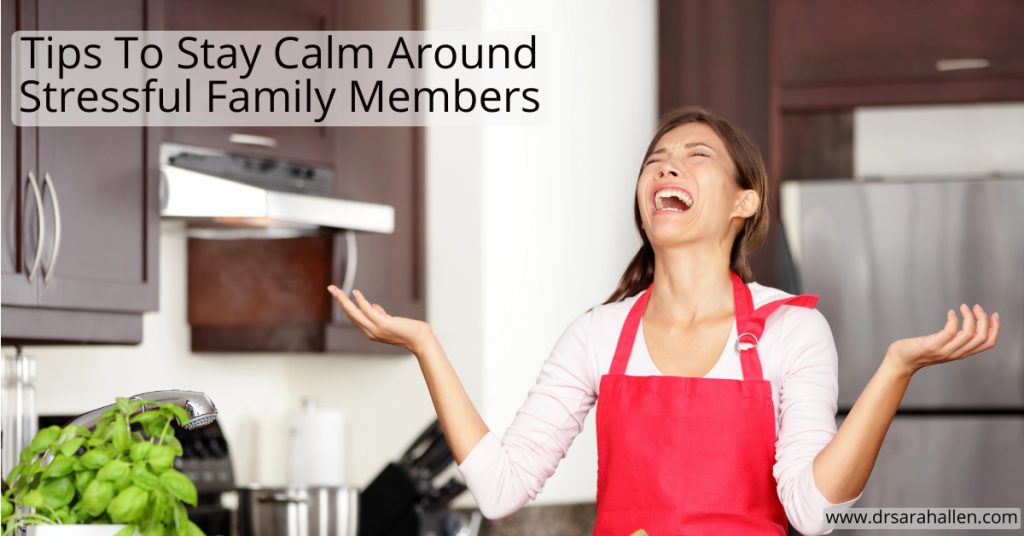
So the image above is a little dramatic and you may not be actually crying out loud, but we both know that the holidays can bring about some complicated emotions. Holidays are often painted as joyful and warm, but that is not always how they feel. I have talked with so many women who dread family gatherings because certain relatives trigger anxiety, guilt, or frustration. When your emotional plate is already full, it might feel harder to deal with sharp comments, pushy opinions, or uncomfortable silence around someone who is difficult.
I am writing this article because Thanksgiving and the holiday season are just around the corner but these tips work just as well at gatherings at anytime of the year. They also work when you are obligated to spend time with stressful people who aren’t family.
I always remind my clients that it is okay to feel conflicted about seeing relatives. You might want to enjoy the season, but feel anxious at the thought of repeating the same stressful interactions. When family members offer unsolicited advice or criticize your parenting choices, it can be deeply frustrating. I have found that preparing emotionally ahead of time, setting clear limits, and using the strategies laid out below can really help reduce that pressure and discomfort.
Acknowledge Your Feelings Without Judgment
One of the first things I encourage is noticing how you feel around the people who overwhelm you. If a cousin tends to make judgmental comments or a parent offers advice you did not ask for, it is okay to say, “This makes me feel small,” or, “That hurts.” There is power in naming those reactions, even to yourself.
Your feelings are not too much. They are not wrong. Being overwhelmed does not mean you are failing as a daughter, sibling, or mom. Naming your hurt, sadness, or anxiety does not make you weak; it helps you take care of yourself. Trust your gut when interactions leave you tense or exhausted. You do not need to explain why a comment does not sit well; it is enough that it does not.
Recognizing your limits can bring clarity. You are allowed to want peace, and these emotional signals are trying to help you protect it.
Set Boundaries That Protect Your Mental Space
Setting boundaries might feel uncomfortable, especially if your family is not used to them. Boundaries are not punishments. They are a way to create some calm for yourself. Before a holiday dinner, think through what kinds of talk feel draining. Maybe it is politics, parenting, or relationship questions. Then plan ahead.
“¢ Tell yourself what is okay and what is not
“¢ Limit the time you spend in certain rooms or with certain people
“¢ Have an excuse ready to step out and breathe when it gets too tense
Sometimes a short sentence is enough. You can say, “I do not want to talk about that right now,” or, “Thanks, but I have got it covered.” Using “I” statements helps you stay calm and clear, without inviting more debate. If someone offers parenting tips you did not ask for, you might say, “I appreciate you care, but I would rather handle things differently.”
Holding your boundaries may feel awkward at first, but your peace is worth repeating them.
Plan for Support and Self-Care Before and After
The days leading up to family gatherings can feel just as heavy as the event itself. We often recommend planning something for yourself before and after those visits. A walk in the cold air, a hot shower, or jotting a few notes in a journal makes space for your emotions.
If you are a new mom, your needs might feel especially sensitive. Big gatherings can quickly become too loud, overstimulating, or just too much to manage after sleepless nights. You are not being selfish if you say no to an event or leave early. Try to stay mindful of your own limits, even when others do not notice them.
After being around tough relatives, give yourself a soft landing. This might mean putting your feet up with a warm drink, venting privately, or watching something calming. Caring for yourself keeps you from pouring too much into situations that leave your cup empty.
Change How You Mentally Engage With Their Behavior
Some family members behave the same way year after year. If you have tried talking things out or setting limits with no change, it might be time to step back from trying to fix how they act. One shift that helps is telling yourself, “This is about them, not me.”
When someone’s behavior pushes a button, you can remind yourself that their reaction comes from their experiences, not from anything you are doing wrong. Reframing difficult people can be freeing. Instead of thinking, “Why are they like this to me?” try asking, “What are they doing that is triggering me, and how do I want to respond?”
You cannot always change their behavior, but you can protect your own. Bringing the focus to what you can control (your breathing, your words, your exit strategy) helps you feel more steady instead of reactive.
Use Past Experiences to Guide New Choices
Think back to other holidays. Which conversations left you stressed? Which visits ended in tears, and which felt more manageable? Use that insight to plan differently this time.
“¢ Was it calmer when you left early?
“¢ Did skipping a certain topic protect your peace?
“¢ Did saying less around a specific person help you feel safer?
It is okay to adjust your response year to year. Just because something is a tradition does not mean it has to stay that way. Change does not need approval from others to be the right decision for you.
Sometimes even small changes (leaving fifteen minutes earlier, sitting next to someone you feel more comfortable with) can ease stress more than expected. Giving yourself permission to make these adjustments can bring a renewed sense of comfort to family gatherings and lessen dread over time.
If a particular approach brought you relief in the past, consider using it again. These small efforts, repeated over multiple occasions, can gradually shift your experience with family dynamics, helping you feel less anxious about future interactions.
Find Calm and Growth in Family Moments
I provide specialized counseling for women navigating family, anxiety, or parenting stress. Many clients have found our practical approach, which combines current cognitive behavioral therapy strategies and mindfulness helpful for managing anxiety that often surfaces at family events. Counseling can guide you in developing personalized coping techniques so you can feel more balanced around challenging relationships.
Choosing support can make a real difference. My areas of expertise include anxiety counseling, maternal mental health, relationship and parenting guidance, and depression therapy for women in the Northbrook area as well as across Illinois, Florida and the UK. Through therapy, you can gain coping skills and deeper self-understanding, which can ease future seasons with family.
Working to respond differently during difficult interactions takes practice. Start slowly and acknowledge your own progress when you notice emotional growth or improved boundary-setting. Over time, it becomes easier to honor your needs, step back from unhelpful conversations, and center your own well-being, even in family spaces that once felt overwhelming.
When family gatherings bring more tension than joy, you do not have to keep bracing yourself through November and December. I have helped many women through therapy that is geared towards finding new ways to handle emotional triggers, set strong boundaries, and feel more centered when things get overwhelming. If you notice the same comments and stress patterns year after year, you deserve space to talk things out and choose responses that actually work for you. It is always okay to protect your peace, especially around people who do not.
For personalized anxiety (or one of the other issues I treat) treatment, contact me, Dr. Sarah Allen, on the form below. I see clients in my office in Northbrook, a North Shore Chicago suburb, or virtually across IL, FL and the UK.

If you have any questions, or would like to set up an appointment to work with me and learn how to reduce anxiety, please contact me at 847 791-7722 or on the form below.
If you would like to read more about me and my areas of specialty, please visit Dr. Sarah Allen Bio.
Dr. Allen’s professional licenses only allow her to work with clients who live in IL, FL & the UK and unfortunately does not allow her to give personalized advice via email to people who are not her clients.
Dr. Allen sees clients in person in her Northbrook, IL office or remotely via video or phone.

What Can I Read That Helps Me While I Am Waiting For My First Appointment With Sarah?
Download this free booklet to gain valuable insights and practical strategies for managing anxiety and worrying.


















As featured in