
Postpartum OCD Intrusive Thoughts: What Helps and Supports
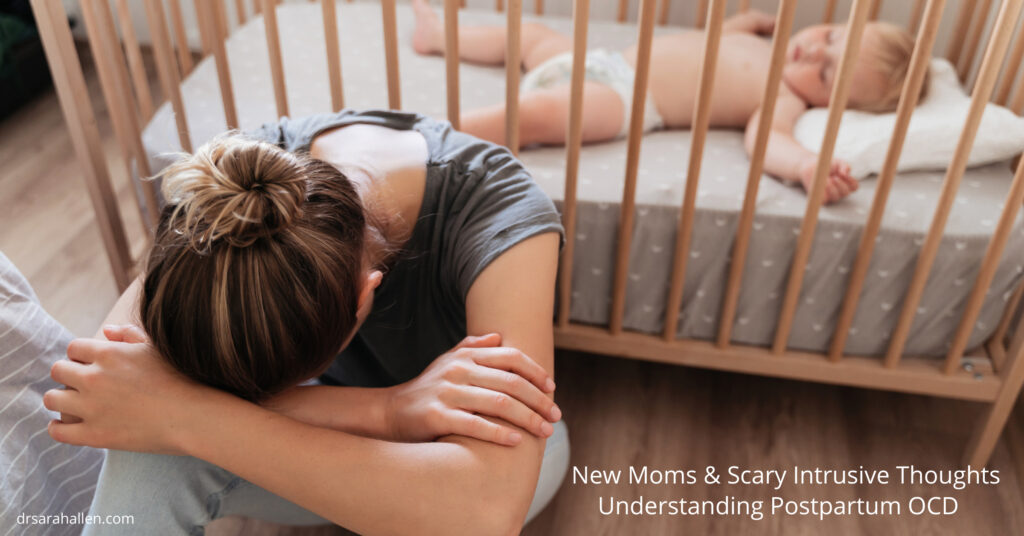
Postpartum OCD with intrusive thoughts about something terrible happening to your baby can feel terrifying but treatment is effective and you don’t have to go through this alone. Many new moms keep these thoughts secret and worry that having them means they are broken, dangerous, or unfit to parent. They often feel too afraid or ashamed to say anything out loud.
In this article, I explain what postpartum OCD and intrusive harm thoughts are, why they feel so upsetting, what can help at home, and when it makes sense to get support from a postpartum anxiety therapist who understands this specific experience. If you want the fuller picture of postpartum OCD symptoms and risk factors first, I cover that in Understanding Postpartum OCD and Scary Intrusive Thoughts.
Key Takeaways
- Postpartum OCD causes intrusive thoughts about harming the baby, leading moms to feel terrified and ashamed.
- Postpartum OCD is different from postpartum psychosis, which involves losing touch with reality and is a medical emergency.
- These types of thoughts are common and they often stem from hormonal changes and increased anxiety.
- Practical strategies at home can ease intrusive thoughts, including small steps like labeling the thought, delaying checking behaviors, and grounding exercises.
- A postpartum anxiety therapist can help moms manage these thoughts, understand their impact, and reduce associated shame.
- Seek support if intrusive thoughts become frequent, intense, or disrupt daily life, especially when feeling hopeless.
Understanding Postpartum OCD and Harm Intrusive Thoughts
Postpartum OCD is an anxiety disorder that shows up during pregnancy or after birth. It centers on unwanted, repetitive thoughts, images, or urges, and a strong urge to do something to feel safer. The thoughts often focus on the baby and can be scary.
Common intrusive themes include:
- Accidental harm, like dropping the baby or the baby rolling off the bed
- Intentional harm, like stabbing, smothering, or throwing the baby
- Contamination or illness, like germs on bottles or hands
- Sexual intrusive thoughts that feel disturbing and out of character
These are thoughts, not plans. Moms with postpartum OCD usually feel horrified by the thoughts and do everything they can to avoid them.
To try to feel safer, many moms develop rituals or patterns, for example:
- Checking the baby’s breathing over and over
- Avoiding knives, stairs, baths, or being alone with the baby
- Repeating certain phrases or prayers in their mind
- Asking a partner or family member again and again for reassurance
It is important to separate postpartum OCD from postpartum psychosis and from everyday worry. With postpartum OCD, the thoughts are ego-dystonic, which means they go against your values and make you feel scared and guilty. You know they do not make sense, but they still feel sticky and alarming. In postpartum psychosis, someone may have delusions or hallucinations and lose touch with what is real, which is a medical emergency. Everyday new parent worry tends to come and go and does not usually lead to intense rituals or avoidance.
A postpartum anxiety therapist can help you figure out what is going on, so you are not left trying to sort all of this out by yourself. If you would like to read more about pregnancy and postpartum anxiety I have written posts called The Facts About Pregnancy & Postpartum Anxiety and How To Manage Pregnancy and Postpartum Anxiety With Cognitive Behavior Therapy (CBT).
Why Intrusive Thoughts Feel so Real and so Shameful
There are reasons your brain is reacting this way. During the postpartum period, there are big hormonal changes, sleep loss, physical healing, and a constant sense of responsibility. The brain’s threat detector gets more sensitive. It is trying to protect your baby, but it often overshoots.
When you have a thought like, “What if I drop the baby down the stairs?”, your brain may treat that thought like a warning instead of random mental noise. Your body reacts as if danger is happening right now. Your heart races, your stomach flips, and your muscles tense. That makes the thought feel even more real.
Many people with OCD also experience something called thought action fusion. This means the brain mixes up having a thought with being more likely to act on it. You might think, “If I thought it, what does that say about me?” or “Does this mean I secretly want to do this?” This quickly leads to shame and self-doubt.
Here is what research and clinical experience tell us about intrusive harm thoughts in OCD:
- They are common in people with OCD, including new parents
- They do not mean someone is more likely to act on them
- People who are horrified by the thoughts are usually very committed to their baby’s safety
Shame makes everything worse. Many moms never share these thoughts because they are scared of being judged or reported. Keeping thoughts secret gives them more power. One of my roles as a postpartum anxiety therapist is to give these thoughts a safe place to be spoken, understood, and put in context.
Practical Strategies to Start Easing Intrusive Thoughts at Home
Self-help tools do not replace therapy, but they can give you a little more space from the fear. Try these ideas gently, without pressure to do them perfectly.
1. Name and label the experience
Instead of taking the thought at face value, practice naming it for what it is.
You might say to yourself:
- “I am having the thought that I might drop my baby.”
- “This is a postpartum OCD intrusive thought.”
- “My anxious brain is sending me another false alarm.”
A simple exercise: Notice the thought, add the words “I am having the thought that…”, then bring your attention back to what you were doing, such as feeding, changing, or rocking your baby.
2. Soften the urge to check or neutralize
Compulsions, like checking or repeating phrases, bring short-term relief but keep the cycle going. You can experiment with tiny delays.
For example:
- When you feel the urge to check the baby’s breathing, wait 1 or 2 minutes
- During that time, take slow breaths and notice the rise and fall of your anxiety
- Remind yourself that anxiety can come up, peak, and go down without you doing anything special
The goal is not to stop every ritual right away. Small steps matter.
3. Ground your body to calm the alarm system
You do not have to erase the thoughts. You are helping your body learn that thoughts do not equal danger.
You can try:
- 4-6 breathing, inhale for 4 counts and exhale for 6, while sitting or feeding
- A quick grounding exercise: notice 5 things you see, 4 you feel, 3 you hear, 2 you smell, 1 you taste
- Gentle muscle relaxation, clench and release your fists, shoulders, and jaw
4. Practice kinder, more accurate self-talk
Harsh self-talk fuels shame. You can practice phrases like:
- “This thought is scary, but it is a symptom, not a warning.”
- “If I truly wanted to harm my baby, I would not feel this upset.”
- “Many other moms have thoughts like this, and there is help.”
As a postpartum anxiety therapist, I often help moms notice and shift these patterns in a way that fits with their values and real lives.
5. Use basic supports, even in small ways
You do not need a perfect self-care plan. Small supports can reduce overall stress.
Think about:
- Accepting help with meals, laundry, or errands when it is offered
- Taking micro rests, even 5 or 10 minutes with your eyes closed or feet up
- Adding one brief moment each day that is not baby-focused, like a short walk, a shower alone, or a few pages of a book
Not every suggestion will fit your situation. It is okay to adapt or skip what does not work for you.
How I Treat Postpartum OCD and When to Seek More Support
When I meet with a mom who is having intrusive harm thoughts, the first step is a careful, gentle assessment. I ask about the thoughts, any rituals, mood, sleep, birth history, medical issues, and support system. I also help sort out whether what she is going through fits postpartum OCD, depression, generalized anxiety, trauma, or something else.
Education is part of treatment. We talk about how intrusive thoughts work in the brain, why they are common in the postpartum period, and why they do not mean she will act on them. Understanding the pattern usually brings some relief.
My therapy approach is CBT-based and tailored to perinatal intrusive thoughts. That often includes:
- Identifying rigid or scary beliefs like “A good mom would never think this”
- Looking at the evidence for and against those beliefs
- Developing more balanced, realistic ways to see the thoughts
- Gently reducing safety behaviors like excessive checking or reassurance seeking in a way that feels safe enough
I do not push moms into dramatic exposure exercises with their babies. Instead, we collaborate on gradual, thoughtful changes that respect both safety and anxiety levels.
In therapy, we also talk about guilt, identity shifts, and relationship stress. Intrusive thoughts do not happen in a vacuum. There may be strain with a partner, family tension, sleep challenges, feeding worries, or disappointment about how birth went. Sometimes we invite partners into a session to help them understand postpartum OCD and learn how to respond in more helpful ways.
So when is it time to see someone? It is a good idea to seek support if:
- Intrusive thoughts are frequent, intense, or taking up a lot of space in your mind
- You are avoiding being alone with your baby or key tasks like baths or diaper changes
- You feel on edge most of the time, or you are not able to rest even when the baby sleeps
- You feel hopeless, disconnected, or have thoughts that your baby would be better off without you
If you ever have thoughts of harming yourself, or feel you might act on thoughts toward yourself or your baby, that is an emergency and needs immediate medical help.
You do not have to manage postpartum OCD alone. As an experienced psychologist, Chicago psychotherapist, and postpartum anxiety therapist, I help women understand these intrusive thoughts, reduce shame, and feel more in control of their daily lives again, whether we are meeting in person or online.
Frequently Asked Questions About Postpartum OCD and Intrusive Thoughts
Having a scary or unwanted thought about your baby’s safety is common in the postpartum period. What makes it postpartum OCD is the distress and shame that comes with it, along with the urge to check or avoid things to feel safer. Being horrified by the thought is actually a sign you are not at risk of acting on it.
With postpartum OCD, the thoughts are ego-dystonic, meaning they go against your values and frighten you. You know they do not make sense even though they feel sticky. Postpartum psychosis involves delusions or hallucinations and a loss of touch with reality, and it requires immediate medical care.
Some moms find relief with grounding techniques, naming the thoughts, and reducing checking behaviors on their own. But when the thoughts are frequent or you are avoiding time with your baby, working with a postpartum OCD therapist speeds up recovery and helps you understand what your brain is doing.
My approach is CBT-based and tailored to perinatal intrusive thoughts. We identify the rigid beliefs behind the fear, look at the evidence for and against them, and gradually reduce safety behaviors like excessive checking or reassurance seeking in a way that feels manageable.
It is time to reach out if the thoughts are taking up a lot of space in your mind, you are avoiding being alone with your baby, you cannot rest even when your baby sleeps, or you feel hopeless or disconnected. If you ever feel you might act on a thought toward yourself or your baby, that is an emergency and needs immediate help.
Start Getting Support For Your Postpartum OCD & Intrusive Thoughts
If worry and racing and intrusive thoughts are making it hard to feel like yourself with your baby, you do not have to sort through this alone. As a dedicated postpartum anxiety therapist, I offer practical tools and compassionate judgment-free support tailored to your unique experience. Together we will figure out what is going on and build a plan that fits your life and your baby.
If you are ready to take the next step, contact me to schedule an appointment or ask any questions. We will work together to understand what you are going through and create a plan to help you move forward.

Dr. Sarah Allen has 25+ years of experience in private practice helping women to transition to being the mom they want to be. She is the Founding Director of the statewide non-profit Postpartum Depression Alliance of IL. She also specializes in pregnancy loss & infertility & has published research on postpartum depression and traumatic childbirth.
If you would like to work with Sarah, please phone her at 847 791-7722 or on the form below.
If you would like to read more about me and my areas of specialty, please visit Dr. Sarah Allen Bio. Dr. Allen’s professional license only allow her to work with clients who live in IL, FL & the UK and unfortunately does not allow her to give personalized advice via email to people who are not her clients.
Dr. Allen sees clients in person in her Northbrook, IL office or remotely via video or phone.

What Can I Read That Helps Me While I Am Waiting For My First Appointment With Sarah?
If you feel that you may be experiencing pregnancy or postpartum mood disorder, or worry that you may be at risk of developing it, please download my free booklets below.
See each specific webpage to download one or many.

















As featured in