
For many women, the challenges of being on top of everything a mother is responsible for can feel overwhelming. There have been a lot of women that I have worked with that come in at first because they feel stressed and overwhelmed, and then through our work together, they discover that they have an underlying diagnosis of ADHD. While ADHD is often associated with hyperactive children, it frequently goes unnoticed in women, especially those who have developed coping mechanisms as adults to manage their symptoms. However, the demands of parenting with the need to juggle schedules, manage household tasks, manage work deadlines and at the same time meeting the constant needs of children, can overwhelm these old coping strategies, making the ADHD symptoms more apparent.
If you have spent years forcing yourself to keep it together, it can be confusing to realize that what you are facing is not flakiness or failing (women are frequently hard on themselves and say these things) but ADHD that had gone undiagnosed all these years. It can bring relief that they now know why life has been challenging and also bring hope as medication and/or learning specific strategies can help them move forward.
In this article, I will explain how ADHD often looks in women, why many mothers are diagnosed later in life, and what actually happens in the brain when ADHD meets the demands of parenting. I will also share practical strategies you can try at home, and how therapy with me can help you feel less alone and more supported.
Recognizing ADHD In Motherhood
Many women do not start seriously questioning whether they might have ADHD until after they become parents. Before children, you may have survived by pulling all-nighters, working right up against deadlines, or hiding the mess in a closet when friends came over. Once you are caring for children, those fragile systems often fall apart.
For many girls and women, childhood ADHD symptoms were labeled as:
“¢ “Shy” or “quiet”
“¢ “Spacey” or “daydreamy”
“¢ “Anxious” or “sensitive”
You might have worked very hard to stay organized, double-check everything, and people-please to avoid criticism. That masking can delay diagnosis for decades. Many women with ADHD are not diagnosed until adulthood, often after their child is evaluated or when motherhood pushes their coping skills past the breaking point.
An ADHD diagnosis often brings mixed emotions:
“¢ Grief about not getting help earlier
“¢ Anger about being misunderstood or dismissed
“¢ Relief that there is finally a clear name and explanation
In therapy, I spend time validating that emotional mix. I help you sort out what belongs to ADHD and what else might need to be addressed. Psychoeducation, or learning how ADHD actually works in the brain, is often the first step in separating shame from identity.
What ADHD Can Look Like In Girls and Women
The stereotype of ADHD is often a young boy who cannot sit still and might have behavioral problems. Many women think, “That is not me, so I cannot have ADHD.” In reality, ADHD in females often looks more internal than external.
Common patterns include:
“¢ Internal restlessness rather than obvious hyperactivity
“¢ Daydreaming and zoning out
“¢ Overthinking, worry, and rumination
“¢ Strong emotional reactions and sensitivity
Masking is also common. You might work very hard to appear “together” at work or school, then fall apart at home. Perfectionism, people-pleasing, and hiding clutter or unfinished tasks can make it harder for others to recognize ADHD.
Because of this, ADHD in women is often mistaken for:
“¢ Anxiety disorders
“¢ Depression
“¢ Mood disorders
Chronic overwhelm, poor sleep, and emotional swings can look like “just” anxiety or mood problems, even when ADHD is underneath. Research in recent years has highlighted that inattentive and combined presentations are more common in females than the classic hyperactive picture often seen in boys. A thorough assessment can clarify what is going on and guide treatment options, including therapy and, when appropriate, medical care.
Emotions A Late ADHD Diagnosis May Bring UP
Hearing “You have ADHD” later in life can feel like both a relief but also grief, frustration and concern.
The grief and frustration side often involves looking back at:
“¢ School and wondering how different things could have been with support
“¢ Early jobs where you were called lazy or careless
“¢ Relationships where you were labeled “too much,” “too emotional,” or “unreliable”
There can be sadness about the years spent thinking, “What is wrong with me?” instead of “My brain works differently.”
Understanding that ADHD reflects differences in attention and executive function, not character flaws. It explains why “you need to try harder” never fixed anything. It helps you see that your struggles were not a lack of caring.
The concern comes from a new diagnosis can shake up your sense of identity:
“¢ Who am I without constant self-blame?
“¢ How do I talk about ADHD with my partner or family?
“¢ What does this mean for me as a mother?
When I work with moms, I help you process both the grief and the relief, build a kinder story about yourself, and then connect that new story to very practical coping skills that actually fit daily family life.
What Motherhood Does To The ADHD Brain
Parenting asks a lot of the brain systems that ADHD already makes harder. Executive function skills include planning, organizing, starting tasks, and shifting between activities.
Motherhood requires:
“¢ Tracking schedules, appointments, and school events
“¢ Planning meals and groceries
“¢ Managing morning and bedtime routines
“¢ Handling constant transitions, from school drop-off to homework to bedtime
“¢ Remembering details for each child, like allergies, homework, and favorite comfort items
ADHD also affects emotional regulation. That means:
“¢ You may react more strongly to tantrums, whining, or sibling fights
“¢ Repeated interruptions can feel you can never get anything done
“¢ Sleep deprivation from night wakings makes focus and patience even harder
On top of that, there is the invisible load of motherhood where you are mentally tracking everyone’s needs, anticipating problems, and worrying about how everyone is feeling. When your working memory, attention, and organization are already taxed by ADHD, that invisible load can feel incredibly heavy!
This is why “just try harder” or “be more disciplined” is not good advice. ADHD involves differences in brain networks and dopamine, a chemical that affects motivation and reward. Shame-based trying to push yourself harder activates your stress response, which actually makes the prefrontal cortex, the part of the brain responsible for planning and self-control, work less efficiently. In other words, the more you criticize yourself, the harder it becomes to do the very things you are criticizing yourself for.
Hormones, Stress, and the ADHD Guilt Cycle
Hormonal shifts can effect how ADHD feels. Estrogen and progesterone interact with dopamine, so changes in hormones can change attention, motivation, and mood.
Many women notice:
“¢ Feeling relatively focused during pregnancy, then overwhelmed postpartum as hormones drop and sleep disappears
“¢ Worsening distractibility, irritability, and low motivation in the premenstrual phase
“¢ A spike in ADHD symptoms in perimenopause that gets blamed only on “hormones” instead of recognizing ADHD is involved
All of this lands right on top of guilt and self-criticism:
“¢ “I am always forgetting school events.”
“¢ “Why can I not stick to routines?”
“¢ “Other parents make this look easy; what is wrong with me?”
That guilt can harden into shame: “I am a bad mom.” Shame is not just an emotion; it is also a body and brain state. When you feel ashamed, your brain shifts into threat mode. Stress chemicals increase, your heart rate rises, and your brain focuses on survival, not long-term planning. The prefrontal cortex that helps with focus, organization, and impulse control becomes less effective.
This creates a painful cycle:
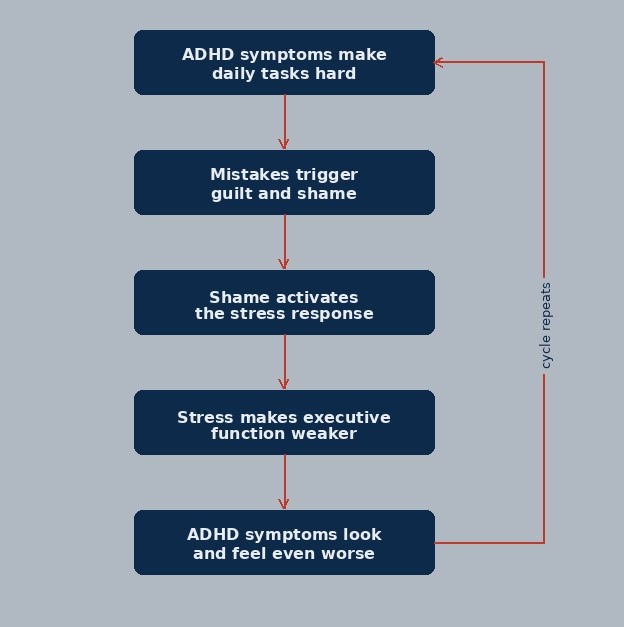
In therapy, I can help you separate your behavior from your worth, practice self-compassion, and calm the nervous system so your brain can actually use the tools you are trying to build.
Practical Strategies To Cope With ADHD
While of course there is no single system that fits every woman, these ADHD-friendly strategies can often help:
“¢ Use visual calendars, alarms, and simple checklists instead of holding everything in your head.
“¢ Break tasks into tiny steps, like “find lunchboxes,” “pack snacks,” “put bags by door.”
“¢ Create predictable anchors, such as a basic morning routine, mealtime and evening routine and a bedtime checklist.
“¢ Pair boring or mindless tasks with something interesting, like music, a podcast, or chatting to a friend.
“¢ Use short timers for focus blocks and notice even 5 or 10 minutes of progress.
“¢ Set up “landing zones” near the door for keys, backpacks, and important papers.
“¢ Talk with a partner about how ADHD impacts you using clear, non-blaming language
“¢ Ask for specific, concrete types of help or reminders
“¢ Notice if you are being self-critical and practice talking to yourself the way you would talk to a close friend who just had a hard day
When you work with me, I will bring an understanding of both the stresses of ADHD and motherhood to help you identify where you are experiencing difficulty, and together we will devise coping strategies to try outside of therapy. I know many strategies from my years of clinical experience to help you reduce anxiety, stress, perfectionism or anger. You know yourself and your needs better than anyone else so we can individualize the tools, adjust them to your and your family’s need, and troubleshoot when life changes happen. If you notice that you feel constantly overwhelmed, you are yelling more than you want to, your relationships are strained, or anxiety and depression are lingering, that is often a sign that professional support could be helpful.
ADHD does not define your worth or your ability to be a good mother. Understanding how your brain works, being kinder in your self-talk can reduce guilt and shame, and building realistic routines and supports can make daily life feel less overwhelming. Even one small shift, like starting a simple checklist or sharing your experience with someone you trust, can be a meaningful step toward feeling less alone.

For more information about signs of adult ADHD read Key Signs of Adult ADHD in Women: What You Need to Know
Take The Next Step Toward Feeling Like Yourself Again
If you are ready to feel more supported, and understood, please explore my women’s counseling services and articles relating to women on my women’s issues blog.
If you are a pregnant or new parent, I have a lot of relevant information on my pregnancy and postpartum services and maternal mental health blog.
Anxiety often goes hand in hand with ADHD so you may also find a lot of my anxiety related blog posts relevant to how you feel at the moment.
Together, we can clarify what you are struggling with and create a plan that truly fits your life. Reach out to me through my Contact Dr. Sarah page or the form below to schedule an appointment or ask any questions you may have. I offer counseling in my office in Northbrook, IL, or virtually in Chicago and across IL, FL & the UK.
Please reach out to me to receive the support you need to manage ADHD and improve your well-being. I can help.

I specialize in empowering women to live the life they want. If you would like to work with me, please phone me at 847 791-7722 or on the form below.
If you would like to read more about me and my areas of specialty, please visit Dr. Sarah Allen Bio. Dr. Allen’s professional license only allow her to work with clients who live in IL, IL & UK and unfortunately does not allow her to give personalized advice via email to people who are not her clients.
Dr. Allen sees clients in person in her Northbrook, IL office or remotely via video or phone.

What Can I Read That Helps Me While I Am Waiting For My First Appointment With Sarah?
I have written five other booklets that you might find interesting: Simple Steps To Overcome Depression, Simple Steps To Overcome Emotional Eating, Guide To Pregnancy & Postpartum Issues, Simple Steps To Overcome Anxiety, and How To Stop Arguing With Your Child.
See each specific webpage to download one or many.
















As featured in