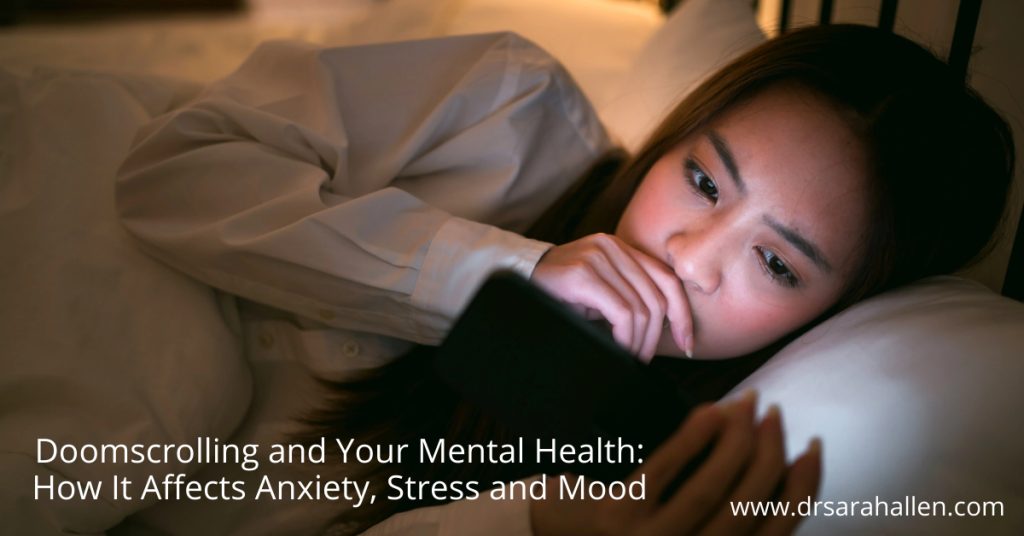
Key Takeaways About Doomscrolling
- Doomscrolling is the consumption of negative news in a way that feels compulsive, leading to increased anxiety and stress.
- It affects the brain by keeping the stress response active, causing symptoms like muscle tension and trouble sleeping.
- Signs of doomscrolling include frequent social media checking, irritability, and struggle to focus or sleep.
- To limit doomscrolling, set specific goals, choose reliable news sources, and engage in grounding activities instead.
- If doomscrolling leads to persistent anxiety or mood issues, consider seeking support from a therapist who specializes in anxiety, stress management and mood disorders.
Doomscrolling is defined as repeatedly consuming upsetting, alarming, or negative news and social media content, often for longer than you meant to. We all do it to some extent, staying informed about current events is useful and seeking more information can feel like a way to gain control and prepare yourself. I see problems beginning when checking the news stops feeling intentional and leaves you more tense, distracted, or unable to step away.
Many people do not notice the pattern right away. One more article, video, or comment can seem like it will bring clarity. Instead, the next post often brings another perceived threat, conflict, or unanswered question. Repeated checking brings temporary relief or you may find yourself jumping from link to link and going down a rabbit hole getting further and further away from the topic you started with.
Below, I explain how doomscrolling and anxiety can affect each other, why this habit can affect mood, how to set limits without ignoring the world around you, and when you know it is time to reach out to me for help.
Why Do We Doomscroll?
I often think of doomscrolling as an understandable response to uncertainty. When difficult events are unfolding, it makes sense to want more information.attempt to feel prepared in an unpredictable world. The problem is that the brain does not always experience repeated exposure to distressing information as preparation. It may experience it as an ongoing danger signal.
The shift from informed to overwhelmed can be subtle. You may open an app for a quick update, then look up and realize a long time has passed. You may leave feeling more upset and drained but still feel pulled to keep checking.
How Does Doomscrolling Affect the Brain?
Your brain is built to notice possible danger. Negative headlines, upsetting images, conflict, and uncertainty naturally pull your attention because your brain is trying to figure out whether a threat is nearby and what you should do about it. When you experience anxiety, your brain undergoes specific changes.
Repeated exposure to alarming content can keep your stress response active. Scrolling through stressful news before bed, during a work break, or right after waking up may leave your body feeling as though it needs to stay on alert. You might notice muscle tension, shallow breathing, irritability, a racing heart, or trouble settling down.
Social media can make this harder because feeds are unpredictable. An alarming post may be followed by emotional commentary, a rumor, a reassuring update, or another upsetting video. That uncertainty can create an urge to keep checking, much like repeatedly looking for an important message.
Research on problematic news consumption has found links between frequent exposure to distressing news and higher stress, anxiety, and poorer well-being. News consumption alone does not cause a mental health condition. Still, a repeated pattern of distressing media use can add strain to an already stressed nervous system.
How Doomscrolling and Anxiety Reinforce Each Other
Anxiety often comes with a strong need for certainty. Checking the news can feel like a way to reduce uncertainty and stay prepared. Yet when every search brings more alarming information, anxiety may increase instead of easing.
When you struggle with uncertainty, generally or perhaps during periods of stress it can provide temporary relief, which reinforces the habit.
Signs Doomscrolling Is Affecting Your Mental Health
• Checking news or social media many times throughout the day
• Having trouble focusing after you scroll
• Feeling more fearful, irritable, or on edge
• Struggling to sleep because your mind is stuck on what you read
• Imagining worst-case outcomes or feeling guilty for stepping away
Doomscrolling and Depression
If you are already feeling low, prolonged exposure to conflict, tragedy, or hopeless commentary may strengthen the feeling that nothing will improve. It can also take the place of activities that support mood, such as movement, rest, hobbies, meaningful routines, or time with another person.
Feeling upset by difficult events does not mean you are overreacting. Emotional responses can be appropriate. The concern is whether doomscrolling is making it harder for you to function, rest, connect, or care for yourself.
How To Set Healthy Boundaries Around The News
Cutting back does not mean becoming uninformed. The goal is to move from automatic, stress-driven checking to intentional information gathering.
Start by noticing your personal pattern. When does doomscrolling tend to happen? What feeling comes before it? Which platforms pull you in most often? How do you feel afterward? For some people, scrolling starts during insomnia. For others, it happens after a stressful workday, an argument, or a moment of uncertainty.
A helpful option is to create a news container. This means choosing a realistic time of day to check reliable sources, setting a timer, and avoiding upsetting content close to bedtime. Specific limits tend to work better than a vague promise to “scroll less.”
From a CBT-based perspective, I encourage people to notice the thought behind the urge to keep scrolling. It may sound like, “I need to know everything,” “If I stop checking, something bad will happen,” or “I should prepare for the worst.” Naming the thought can create enough space to choose a different response.
10 Practical Tips to Cut Back on Doomscrolling
1. Choose one or two reliable news sources instead of relying on an endless social media feed.
2. Set a time limit for news consumption, such as 15 or 20 minutes.
3. Avoid checking upsetting news immediately after waking up or before trying to sleep.
4. Turn off nonessential breaking-news alerts and social media notifications.
5. Move news and social media apps off your home screen so automatic checking takes an extra step.
6. Ask yourself, “What am I hoping to get from scrolling right now?” before opening an app.
7. Replace one scrolling period with a grounding activity, such as stretching, taking a walk, making tea, or stepping outside.
8. Use a timer or app limit when scrolling tends to continue longer than intended.
9. Unfollow accounts that use fear, outrage, or constant urgency to hold your attention.
10. Talk with someone supportive when a news event is weighing heavily on you instead of trying to process it alone through repeated scrolling.
Try not to criticize yourself for this habit. Doomscrolling often develops during periods of stress, anxiety, uncertainty, or emotional exhaustion. A more helpful approach is to notice the pattern and make one manageable change at a time.
When Should You Seek Help For Doomscrolling and Anxiety?
Seeking help from an experienced therapist can be helpful if doomscrolling is contributing to ongoing anxiety, low mood, panic symptoms, sleep problems, intrusive thoughts, relationship strain, or difficulty managing daily responsibilities. In therapy, I help clients understand the thoughts, emotions, physical sensations, and habits that can keep anxiety-driven behaviors going as well as looking at the Root Causes of Anxiety.
The goal is not to become detached from difficult events or to ignore information that matters. It is to protect your mental health while staying connected to your values, relationships, and daily life. Even a small boundary, practiced consistently, can help your brain move out of constant alert mode.
If doomscrolling is contributing to persistent worry, trouble sleeping, or difficulty focusing, anxiety counseling can help you understand the patterns that keep anxiety going.
I offer specialized anxiety and depression therapy across Illinois, Florida and the UK to work through the thoughts, habits, and stress responses involved.
You do not have to deal with this alone. Contact me to schedule an appointment.

If you have any questions, or would like to set up an appointment to work with me and learn how to reduce anxiety, please contact me at 847 791-7722 or on the form below.
If you would like to read more about me and my areas of specialty, please visit Dr. Sarah Allen Bio.
Dr. Allen’s professional licenses only allow her to work with clients who live in IL, FL & the UK and unfortunately does not allow her to give personalized advice via email to people who are not her clients.
Dr. Allen sees clients in person in her Northbrook, IL office or remotely via video or phone.

What Can I Read That Helps Me While I Am Waiting For My First Appointment With Sarah?
Download this free booklet to gain valuable insights and practical strategies for managing anxiety and worrying.





As featured in