
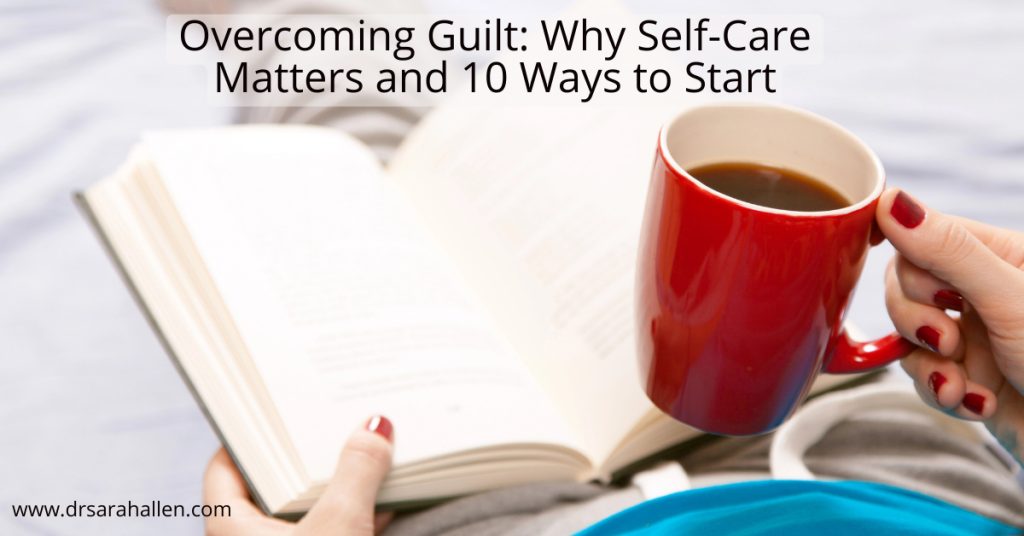
Understanding the Guilt of Self-Care
Women carry the emotional and practical load in relationships, especially after having children. This leads to a constant juggling act between dealing with responsibilities and her personal needs. I think this sets women up to “fail” as no one person can juggle so much. Yet I often see that feeling overwhelmed often leads to women judging themselves for not being able to do it all. Many women instinctively place others first, putting their own self-care on the back burner. This tendency is fueled by a sense of guilt, a feeling that taking time for oneself is somehow selfish and an emotional cycle between anger, frustration, exhaustion and guilt. Understanding this guilt and its origins is the first step in reframing self-care as not just important, but essential.
Reframing, a key technique in Cognitive Behavioral Therapy, offers a way to shift this perspective. By viewing self-care as a necessary component for maintaining overall well-being, women can begin to see how their health directly benefits everyone in their lives, from loved ones to colleagues. When you take care of yourself effectively, you increase your capacity to support and nurture those around you.
Think of it as putting on your own oxygen mask first. Feeling less physically and emotionally exhausted enables you to be more present, and less overwhelmed. So, it’s vital to reframe self-care not as a luxury, but as a foundational aspect of living well. This positive shift in mindset makes self-care a natural, guilt-free choice that enhances both personal health and the relationships around you.
Unpacking the Why Behind Your Guilt
Looking at the root causes of guilt associated with self-care reveals influences deeply embedded in societal norms and personal beliefs. Society has praised selflessness in women, often depicting them as caregivers who sacrifice their own needs for others. This expectation can lead to feelings of guilt when women attempt to prioritize themselves. Women may develop internalized beliefs that suggest personal time is indulgent or unnecessary.
Understanding these reasons can be liberating. It allows one to confront these misconceptions and challenge longstanding beliefs. When you acknowledge why the guilt exists, you can begin to dismantle it. Reframing self-care as essential to your overall wellness, rather than a selfish act, can help in this process.
To begin reframing guilt, try these approaches:
1. Reflect on the origins of your beliefs about self-care.
2. Recognize that societal messages do not dictate personal worth or values.
3. Replace negative thoughts with positive affirmations about the importance of caring for oneself.
By exploring these aspects, being able to prioritize self-care becomes clearer and less burdened by guilt and taking time for yourself gradually changes into an act of self-respect.
Practicing Self-Compassion and Starting Small
Self-compassion is a fundamental aspect of self-care. It means treating yourself with the same kindness and understanding you would offer a friend. When guilt creeps in over taking time for yourself, gently remind yourself that prioritizing personal health is beneficial for everyone around you.
Starting small makes self-care feel manageable rather than overwhelming. You might begin with a five-minute break to enjoy a quiet cup of tea or set aside ten minutes for deep breathing exercises during a busy day. These small steps can serve as building blocks for a sustainable self-care routine.
Setting realistic and achievable goals can make a significant difference. The key is to acknowledge these small steps as victories in your path to better self-care. Remember that self-care doesn’t have to be elaborate or time-consuming to be effective, it’s just you prioritizing yourself sometimes when typically you prioritize everything else before you 🙂
Ten Easy Tips To Start Your Self Care Journey Without Guilt
When working with clients who struggle with guilt around their self-care, I often say start with small, manageable steps that gradually build habits and create lasting change. The goal is to make self-care feel natural rather than forced. Pick any of these ideas that appeal to you and then add your own ideas too!
Move Your Body in a Way You Enjoy
Physical movement doesn’t have to mean hitting the gym or following a strict exercise routine. Find activities that bring you joy. Whether it’s dancing in your living room, taking a gentle walk in the park, or stretching while watching TV, movement releases endorphins that naturally elevate your mood. The goal is to find movement that feels good rather than punishing.
Connect with Someone Who Boosts Your Mood
Social connections are vital for emotional health. Spend time with a friend or family member who makes you laugh and feel good. This might be a phone call with an old friend, coffee with a colleague, or simply texting someone who always brightens your day. These connections remind you that you’re valued and supported.
Immerse Yourself in a Good Book or TV Show
Allow yourself to get lost in a story or show without feeling guilty about the time spent. This type of mental escape can be incredibly rejuvenating. Whether it’s a mystery novel, a comedy series, or a documentary about something you find fascinating, engaging your mind in this way provides valuable mental rest.
Plan Something to Look Forward To
Having future events to anticipate can provide an immediate mood boost. Schedule something that excites you, whether it’s a small gathering with friends, a day trip to somewhere new, or even just trying a new restaurant. The anticipation itself releases feel-good chemicals in your brain and gives you something positive to focus on during stressful times.
Practice Gratitude Journaling
Each day, jot down a few things you’re grateful for. This practice shifts focus from what’s lacking to life’s abundant positives, enhancing your overall outlook. You can write about big things like your health or small moments like a delicious cup of coffee. This simple practice rewires your brain to notice positive aspects of your life more readily.
Read Gratitude: A Simple Way To Increase Happiness
Declutter a Small Space
Tidying up a space like your desk or a kitchen drawer can have a surprisingly calming effect. Clutter can increase stress and make it harder to focus. When your environment feels chaotic, your mind often follows suit. Start with one small area and notice how creating order in your physical space can create a sense of mental clarity and calm.
Learn Something New
Engaging in new activities stimulates your brain through neuroplasticity, which can be particularly beneficial for managing anxiety and stress. Whether it’s learning a new recipe, trying a creative skill, or taking an online course about something interesting, learning creates new neural pathways that can help break patterns of anxious thinking.
Read Anxiety, The Brain & How Therapy Helps
Enjoy Nature
Spending time outside has documented benefits for mental health. This doesn’t require a major hiking expedition. You might sit in your backyard, tend to plants, or take a walk around your neighborhood. Fresh air and natural light can help regulate your mood and reduce stress hormones.
Take a Relaxing Bath
A warm bath is a simple yet luxurious way to unwind. The warm water helps your muscles relax and can ease tension you might be holding in your body. It also increases “feel-good” neurotransmitters and hormones like serotonin, dopamine, and endorphins.
Engage in Creative Activities
Creative activities like drawing, writing, crafting, or playing music offer therapeutic benefits beyond just enjoyment. They provide a way to express emotions that might be difficult to put into words. Creative expression can be meditative and helps you process feelings in a healthy way. You don’t need to be skilled at these activities for them to be beneficial.
Making Self-Care Your New Normal
By integrating self-care practices, you not only invest in your health but you may also positively affect the lives of those around you. If you are more rested, you can be calmer when others are dysregulated and you are able to deal with difficult situations better than if you are overwhelmed and frazzled.
Remember that self-care isn’t a one-time event but a continuous commitment to your own well-being. This ongoing practice can sustain you and put you in an emotionally good place so you have the emotional resources to show up fully for the people and responsibilities that matter most to you.
If you’re ready to take the next step in prioritizing your mental health and discover the benefits of engaging in anxiety counseling we can work together to help you reframe self-care as essential and empower you to maintain emotional well-being.
For personalized anxiety (or one of the other issues I treat) treatment, contact me, Dr. Sarah Allen. I see clients in my office in Northbrook, a North Shore Chicago suburb, or virtually across IL, FL and the UK.

If you have any questions, or would like to set up an appointment to work with me and learn how to reduce anxiety, please contact me at 847 791-7722 or on the form below.
If you would like to read more about me and my areas of specialty, please visit Dr. Sarah Allen Bio.
Dr. Allen’s professional licenses only allows her to work with clients who live in IL, FL & the UK and unfortunately does not allow her to give personalized advice via email to people who are not her clients.
Dr. Allen sees clients in person in her Northbrook, IL office or remotely via video or phone.

What Can I Read That Helps Me While I Am Waiting For My First Appointment With Sarah?
Download this free booklet to gain valuable insights and practical strategies for managing anxiety and worrying.




















As featured in