
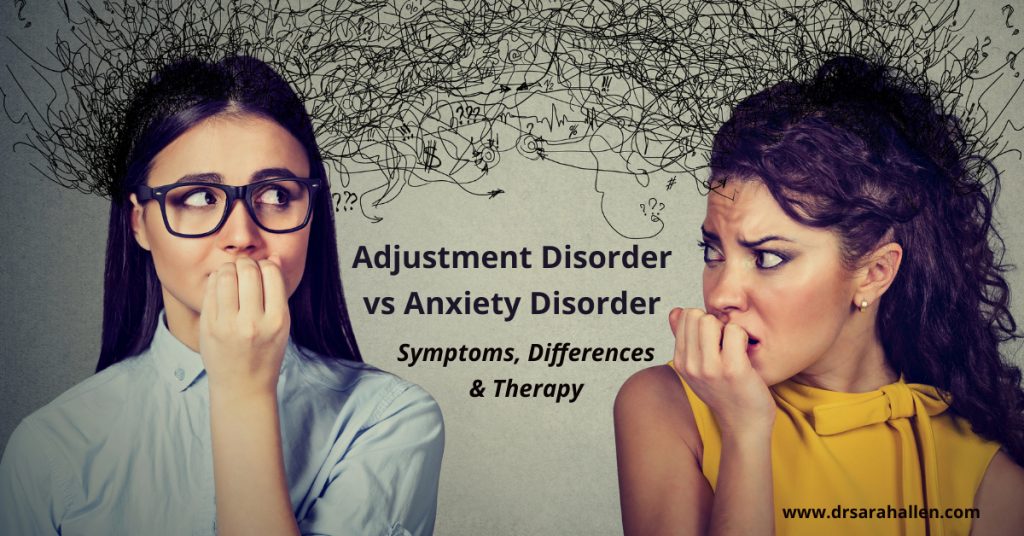
One of my clients asked me this week what is the difference between being diagnosed with an adjustment disorder or an anxiety disorder, so I thought I would write a blog post about it as I expect other people are wondering this too.
Anxiety can begin for different reasons, and although symptoms can be similar, they show up in different ways. In this article I hope to break down the differences clearly, so you can learn what they mean and how they affect you.
What is An Adjustment Disorder?
Adjustment disorder means someone is having a hard time coping with a specific stressful event. It is a strong emotional or behavioral reaction that starts within three months of a stressful event and is out of proportion to what’s typically expected and gets in the way of day-to-day life.
Some people feel the effects after big changes like going away to college, divorce or new baby. Others struggle with things like illness, death of a loved one or family problems. Each person responds differently depending on life experiences or how much support they have.
What makes adjustment disorder different from other conditions is that it’s directly tied to something specific. It’s temporary, but that doesn’t mean it’s not hard. Getting help early on can make the move back to feeling steady a lot smoother.
What is Anxiety Disorder?
Anxiety disorders are chronic conditions that often don’t have a specific external trigger. Treatment focuses on addressing underlying issues and identifying unhelpful thought and behavior patterns that affect emotions. We will then develop individualized coping strategies to managing symptoms.
There are different types of anxiety disorders and each have different criteria.
Generalized Anxiety Disorder (GAD) This is the most common form of anxiety and is when people have excessive anxiety and worry which occurs more days than not. In addition, symptoms of restlessness, fatigue, concentration problems, irritability, muscle tension and sleep disturbance may be present. Someone experiencing GAD finds it really difficult to control or regulate their worry.
For more information read Understanding Generalized Anxiety Disorder
Panic Disorder A panic attack is an intense fear or discomfort accompanied by physical symptoms such as sweating, trembling and chest pain. People’s thoughts are usually about fear of losing control and/or dying. A panic attack can happen with any of the anxiety disorders, but panic disorder itself is characterized by recurrent, unexpected panic attacks and persistent concerns about having additional panic attacks.
For more information read Panic Attack vs Anxiety Attack: What Is the Difference?
Social Anxiety This is where people worry about social situations and have a fear of being seen negatively by others. This often leads to people avoiding social situations or if they have to go there is a lot of worry beforehand and often rumination about it afterwards.
For more information read Understanding and Overcoming Social Anxiety
Specific Phobia This is when anxiety is a persistent and excessive fear about an anticipated or actual encounter with a specific object or situation e.g. spiders. A phobic person often organizes their life around avoiding it.
Obsessive-Compulsive Disorder (OCD) A person with OCD has obsessions (which are persistent thoughts, images or impulses) and compulsions (which are behaviors done to reduce their anxiety). Having OCD is time-consuming and can really impact life activities. People with OCD recognize that their worries and compensating behaviors are excessive but cannot stop for fear of what will happen if they don’t do them. The most frequent compulsions involve washing and cleaning, counting, seeking assurances, checking and/or repeating actions.
Post-Traumatic Stress Disorder (PTSD) The anxiety in Post-Traumatic Stress Disorder is clearly associated with a traumatic event that the person experienced or witnessed and involved intense fear, horror or helplessness. In addition, there are recurrent, intrusive recollections of the events which are anxiety-provoking and distressing to the person. There may be avoidance of any situations associated with the original trauma and other anxiety-related symptoms such as hyper-vigilance or exaggerated startle response.
Pregnancy & Postpartum Anxiety This is when symptoms occur during pregnancy or up to a year after having a baby. Approximately 6% of pregnant women and 10% of postpartum women develop anxiety, sometimes alone, and sometimes in addition to depression.
For more information read How To Manage Pregnancy and Postpartum Anxiety With Cognitive Behavior Therapy (CBT)
People often try to push through anxiety, think it will go away, or tell themselves it’s “just stress.” But an anxiety disorder isn’t something to just wait out. It often takes a more focused plan to manage and treat.
Key Differences Between Adjustment and Anxiety Disorders
Adjustment and anxiety disorders can look alike in some ways. Both can leave you feeling overwhelmed but once we look a little deeper, the differences start to show.
1. Root Cause
- Adjustment Disorder:
- Triggered by a specific identifiable stressor (e.g., job loss, divorce, moving, illness).
- Symptoms are a direct response to the stressor and typically resolve once the individual adapts or the stressor is removed.
- Anxiety Disorders:
- Not necessarily tied to a specific event or stressor.
- Symptoms are often chronic and may persist even in the absence of external stressors.
For more information read What Causes Anxiety: Understanding the Roots.
2. Symptom Duration
- Adjustment Disorder:
- Symptoms begin within 3 months of the stressor and typically resolve within 6 months after the stressor is removed or the individual adapts.
- It is a short-term condition.
- Anxiety Disorders:
- Symptoms are long-lasting and can persist for months or years.
- They may fluctuate in intensity but are often chronic without treatment.
3. Emotional Symptoms
- Adjustment Disorder:
- Anxiety is situational and directly linked to the stressor.
- Symptoms include:
- Excessive worry about the specific stressor.
- Feeling overwhelmed or unable to cope with the situation.
- Sadness or hopelessness may also accompany the anxiety.
- Anxiety Disorders:
- Anxiety is more generalized and not always tied to a specific situation.
- Symptoms include:
- Persistent and excessive worry about a wide range of topics (e.g., health, work, relationships).
- Fear or dread that is disproportionate to the situation.
- Panic attacks (in some cases, like Panic Disorder).
4. Physical Symptoms
- Adjustment Disorder:
- Physical symptoms are typically mild and situational, such as:
- Restlessness.
- Muscle tension.
- Difficulty sleeping.
- These symptoms are often temporary and subside as the stressor is resolved.
- Physical symptoms are typically mild and situational, such as:
- Anxiety Disorders:
- Physical symptoms are more intense and chronic, including:
- Heart palpitations or chest pain.
- Sweating or trembling.
- Shortness of breath or dizziness.
- Gastrointestinal issues (e.g., nausea, diarrhea).
- Chronic fatigue or headaches.
- Physical symptoms are more intense and chronic, including:
5. Behavioral Symptoms
- Adjustment Disorder:
- Symptoms are often focused on avoiding or withdrawing from the specific stressor.
- Examples:
- Avoiding situations or people related to the stressor.
- Difficulty concentrating on tasks due to preoccupation with the stressor.
- Anxiety Disorders:
- Symptoms may include avoidance behaviors, but they are more generalized and pervasive.
- Examples:
- Avoiding social situations (Social Anxiety Disorder).
- Avoiding places or situations that might trigger panic (Panic Disorder).
- Compulsive behaviors to reduce anxiety (Obsessive-Compulsive Disorder).
6. Severity and Impact
- Adjustment Disorder:
- Symptoms cause distress but are generally less severe than those of anxiety disorders.
- The distress is proportional to the stressor and resolves as the individual adapts.
- Anxiety Disorders:
- Symptoms are often more severe and can significantly impair daily functioning.
- The distress is often disproportionate to the situation or may occur without any identifiable trigger.
7. Duration of Treatment
- Adjustment Disorder: Treatment is typically short-term, lasting a few months, as symptoms usually resolve once the individual adapts to the stressor or the stressor is removed.
- Anxiety Disorders: Treatment is often long-term, as these disorders can persist for years or even a lifetime. The goal is to manage symptoms and prevent relapses.
8. Therapy Approaches
- Adjustment Disorder:
- Supportive Counseling: Provides emotional support and helps the individual process the specific stressor.
- Problem-Solving Therapy: Focuses on developing practical strategies to address the stressor.
- Stress Management Techniques: Teaches relaxation methods, time management, and coping skills to handle the immediate stressors.
- Anxiety Disorders:
- Cognitive-Behavioral Therapy (CBT): Focuses on identifying and changing negative thought patterns and behaviors that perpetuate anxiety.
- Exposure Therapy: Gradual exposure to feared situations or stimuli to reduce avoidance and desensitize the individual.
- Mindfulness-Based Therapies: Techniques like meditation and relaxation to manage chronic anxiety.
- Acceptance and Commitment Therapy (ACT): Helps individuals accept their anxiety and commit to actions aligned with their values.
I’ve learned through experience that asking the right questions early on helps point toward what kind of care works best. The moment someone tells me their stress started right after a major event, I consider adjustment disorder. If they can’t remember a starting point but are always anxious, I look more closely at anxiety disorder.
I have found that Cognitive Behavioral Therapy (CBT) is a very useful treatment modality for both anxiety disorders and adjustment disorder because it gives you tools you can use to manage current stressors and to look at longer standing thoughts and behaviors that keep you in an anxious state. For more details read CBT for Anxiety: What It Is and How It Works.
When To Seek Professional Help
Deciding to talk to someone is a big step. Whether it’s anxiety disorder or adjustment disorder, getting help gives you the chance to figure out what’s truly going on. A professional diagnosis means you won’t keep guessing, and it lays the foundation for healing.
When people reach out to me, many are unsure if what they’re going through is “serious enough.” I always offer the same guidance. If your thoughts or feelings are getting in the way of your daily life, that’s reason enough to get support.
Treatment might involve regular therapy, mindfulness tools, or learning better ways to deal with change and stress. If symptoms are more severe, medication may help too. It’s about finding the right mix that fits your needs.
You don’t have to keep struggling on your own. Knowing there’s a name for what’s going on and realizing that it’s treatable is what helps people start feeling better.
It can feel stressful and overwhelming to chose a therapist so I wrote this article so you would know more about what to expect when we work together in understanding your personal experience of anxiety and what can work or you.
To read it visit Common Questions About Anxiety Counseling.
Understanding what you’re feeling is a major first step. Whether it’s adjustment disorder tied to a recent event or anxiety disorder with deeper roots, knowing the difference helps shape what to do next. What matters is how you respond and take care of yourself.
What I want you to remember that both disorders can affect how you think, feel, and act. But both can get better over time. I’ve seen progress again and again, not overnight, but with steady steps. That all starts with understanding, then reaching out when things get too heavy.
Reading about symptoms and definitions is helpful but making sense of what you’re personally facing is where real change begins. If you’ve been struggling and wondering what’s happening under the surface, I hope this shines a little light.
You’re not alone. Healing is possible. And you deserve to feel better.
If you’re ready to explore how anxiety might be impacting your life and want personalized assistance, consider reaching out for guidance. Taking the first step toward understanding and managing your anxiety can feel overwhelming. Learn more about anxiety counseling with me. I also have many blog posts about anxiety related topics that you may also find helpful.
For personalized anxiety (or one of the other issues I treat) treatment, contact me, Dr. Sarah Allen. I see clients in my office in Northbrook, a North Shore Chicago suburb, or virtually across IL, FL and the UK.

If you have any questions, or would like to set up an appointment to work with me and learn how to reduce anxiety, please contact me at 847 791-7722 or on the form below.
If you would like to read more about me and my areas of specialty, please visit Dr. Sarah Allen Bio.
Dr. Allen’s professional licenses only allow her to work with clients who live in IL, FL & the UK and unfortunately does not allow her to give personalized advice via email to people who are not her clients.
Dr. Allen sees clients in person in her Northbrook, IL office or remotely via video or phone.

What Can I Read That Helps Me While I Am Waiting For My First Appointment With Sarah?
Download this free booklet to gain valuable insights and practical strategies for managing anxiety and worrying.







As featured in