
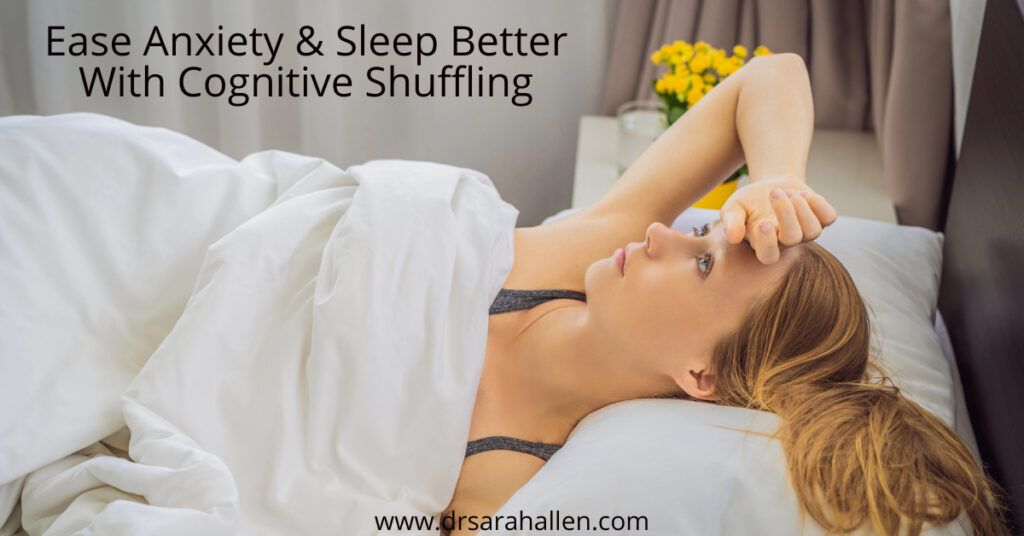
Ever find yourself lying in bed, trying to go to sleep but instead thoughts are bouncing around in your head? That’s where cognitive shuffling can be of help. This intriguing method is gaining attention for its ability to help manage two common challenges many people face: anxiety and sleep problems. Cognitive shuffling taps into the brain’s natural processes to ease the mind, making it easier to unwind and drift off to sleep.
Cognitive shuffling stands out because it’s not about suppressing your thoughts or trying hard to relax. Instead, it works by gently shifting your focus away from worry. Speaking from my own experience as well as my client’s, I’ve seen how incorporating this easy-to-use technique can lead to noticeable improvements. People find that engaging cognitive shuffling reduces the intensity of their racing thoughts and helps them settle down for the night.
What Is Cognitive Shuffling?
Cognitive shuffling, in the simplest terms, is like giving your brain a puzzle to solve. When you shuffle a deck of cards, you mix things up. Similarly, this method involves mixing up your thoughts deliberately. The aim is to distract your brain just enough to stop it from spiraling into worry mode. Here’s how it works:
– Pick a Neutral Word: Choose a simple word like “cat” or “dog.”
– Create A Word List: Think of words that start with each letter of your chosen word. For instance, with “cat,” you might think of “car,” “apple,” “tree.”
– Focus: As you think of these words, your brain focuses less on stressful thoughts.
This technique is straightforward, yet effective. By engaging various parts of your brain with these simple mental tasks, you allow your mind to escape the grip of looping anxiety-driven thoughts. It helps in creating a mental distraction, which is often what you need to fall asleep.
How Cognitive Shuffling Can Help Anxiety and Overthinking
The link between cognitive shuffling and reduced anxiety is fascinating. Anxiety often stems from a cycle of negative thoughts and overthinking. Picture overthinking as a fan that’s spinning too fast. Shuffling your thoughts is like turning off the switch to slow things down. This unexpected shift in focus can bring relief.
Here’s where the magic happens—when your mind actively engages in a task that doesn’t demand deep concentration, anxiety loses its footing. People who use this technique often find themselves getting less tangled in their thoughts. It breaks that cycle and provides a mental break, allowing for calmer, more grounded feelings.
I’ve observed that once people get the hang of cognitive shuffling, they report feeling more at ease. It’s a simple tool, yet it opens a space for tranquility among the noise of everyday worries.
For more information about Overthinking:

For more information about overthinking read 5 Signs You Are Overthinking & How CBT Can Help!
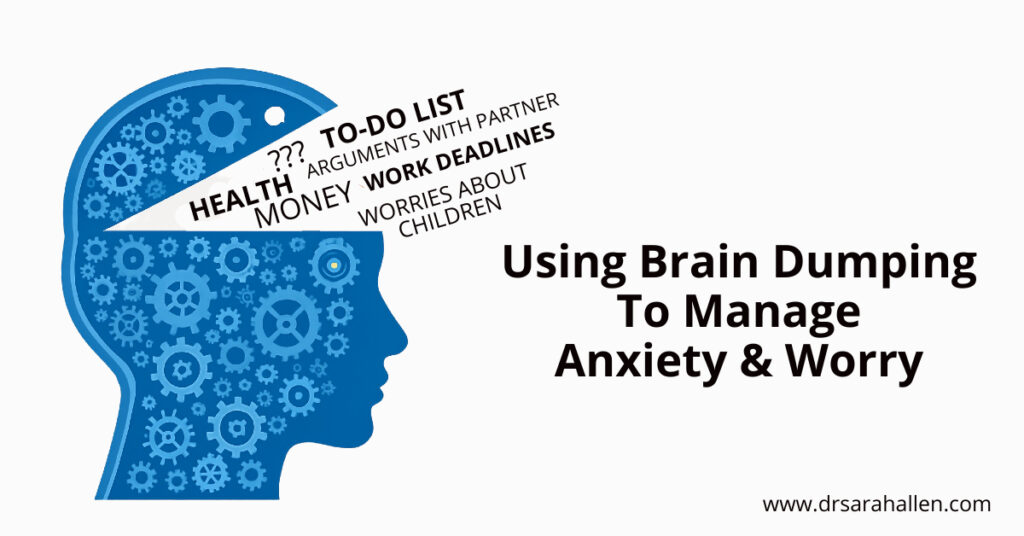
For a similar technique to manage anxiety read Using Brian Dumping To Manage Anxiety & Worry
How Cognitive Shuffling Can Improve Sleep and Help with Insomnia
Cognitive shuffling can be a significant ally for those battling insomnia. By scrambling your thoughts in a deliberate way, this technique guides your brain away from focusing on worries that keep you awake. When your mind stops dwelling on stress, the body can relax. This method introduces an element of non-threatening distraction, which helps your brain wind down.
Imagine lying in bed and focusing on a simple list of unrelated words. Your brain gets occupied with this task, diverting it from pre-sleep anxieties. This calming focus might help your body measure relaxation. Some clients have shared how this has led them to fall asleep more easily, as the process helps push away thoughts that usually snowball into stress.
Here’s a quick summary of how cognitive shuffling supports sleep:
– It interrupts unproductive thought spirals.
– It encourages relaxation by diverting attention.
– It offers a simple, non-medication option to try.
The flexibility of cognitive shuffling means you can use it whenever sleeplessness strikes, offering an accessible approach to manage insomnia.
For more articles about insomnia and anxiety read:

For more information about sleep and anxiety read The Relationship Between Sleep & Anxiety

For more tips you can also read How To Manage Anxiety At Night
Integrating Cognitive Shuffling into Your Routine
The beauty of cognitive shuffling lies in its simplicity. By embracing this method, you can cultivate a peaceful mind that is less susceptible to anxiety and more ready for restful sleep. The benefits I’ve seen in those who practice this technique often stem from their consistency and openness to trying new approaches.
To get started, make cognitive shuffling part of your nightly routine. Begin by choosing your neutral word and creating a list that shifts your focus. As you practice, you might discover how this gentle reorientation makes a difference. Sometimes, the most effective methods are the simplest. With cognitive shuffling, a calmer, more restful night is within reach.
If you’re wondering how anxiety counseling can support tools like cognitive shuffling in easing overthinking and improving sleep, I invite you to reach out to me as I specialize in helping people work toward a calmer mind in the daytime and at night.
For personalized anxiety treatment, contact me, Dr. Sarah Allen. I see clients in my office in Northbrook, a North Shore Chicago suburb, or virtually across IL, FL and the UK.

If you have any questions, or would like to set up an appointment to work with me and learn how to reduce anxiety, please contact me at 847 791-7722 or on the form below.
If you would like to read more about me and my areas of specialty, please visit Dr. Sarah Allen Bio.
Dr. Allen’s professional licenses only allow her to work with clients who live in IL, FL & the UK and unfortunately does not allow her to give personalized advice via email to people who are not her clients.
Dr. Allen sees clients in person in her Northbrook, IL office or remotely via video or phone.

What Can I Read That Helps Me While I Am Waiting For My First Appointment With Sarah?
Download this free booklet to gain valuable insights and practical strategies for managing anxiety and worrying.


























As featured in