
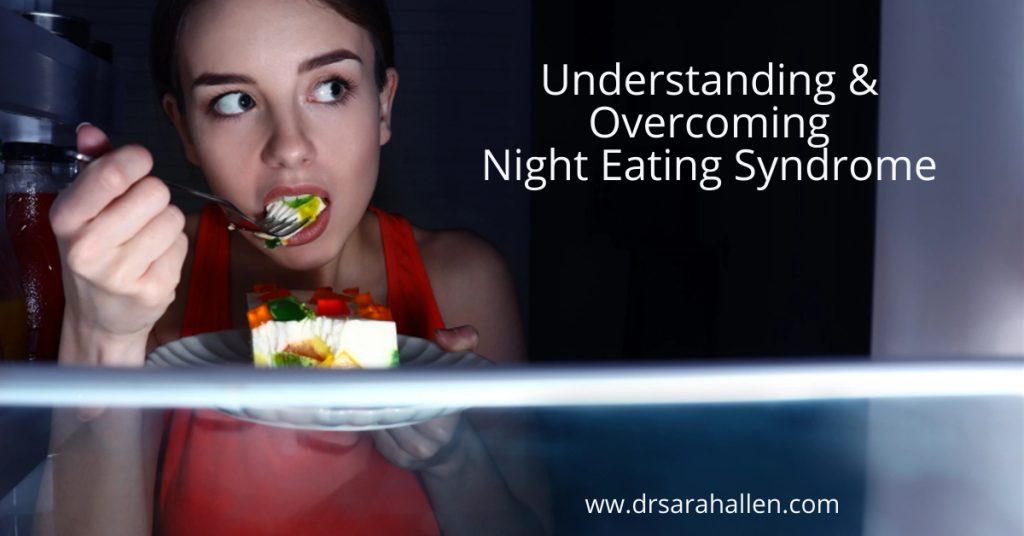
Do you find yourself raiding your refrigerator at night or reaching for unhealthy snacks even after a full dinner? You might be experiencing Night Eating Syndrome (NES). NES is an under-recognized and often misunderstood emotional eating disorder. Falling under the broader category of eating disorders, Night Eating Syndrome is a condition primarily characterized by a delayed pattern of food intake, resulting in the consumption of a significant portion of daily calories during late-night hours. If left unmanaged, NES can contribute to various health concerns, such as weight gain, obesity, and sleep disturbances.
In this article I am going to explore the causes and effects of Night Eating Syndrome, helping you understand and identify the signs and symptoms of this emotional eating disorder. Then I will talk about various self-help strategies and professional treatment options available.
Symptoms Of Night Eating Syndrome (NES)
Night Eating Syndrome (NES) is characterized by patterns of disordered eating and sleep behaviors, which are often linked to emotional or psychological factors:
Excessive Nighttime Eating: Consuming at least 25% of daily calories after dinner or during the night.
Nighttime Awakenings: Waking up at least twice a week to eat, often to help fall back asleep.
Lack of Morning Hunger: Minimal appetite in the morning, with breakfast often delayed.
Sleep Difficulties: Struggling with insomnia or disrupted sleep at least four nights a week.
Mood Disturbance: Experiencing depression, anxiety, or feelings of guilt, often worsening in the evening.
Food Cravings: Strong cravings for high-carb or high-calorie foods at night.
The Hidden Impact of Night Eating Syndrome
Night Eating Syndrome (NES) goes beyond mere late-night snacking, often flying under the radar as a serious eating disorder. It is predominantly caused by emotional disturbances, leading to compulsive eating habits during the late hours of the night. The condition can have a dramatic impact on both mental and physical health. Compulsive eating and the associated guilt or shame can exacerbate mental health issues such as depression, anxiety, and low self-esteem.
Physical health is also affected by NES, with consequences including weight gain, obesity, and sleep disturbances. These issues can lead to a diminished quality of life for those struggling with night eating. If you suspect that you or a loved one may be dealing with NES, it’s important to consider the impact this disorder may have on overall health and well-being.
Identifying the Triggers: The Link Between Emotions and Night Eating
Emotions play a significant role in the development and persistence of Night Eating Syndrome. For many people struggling with this condition, emotions such as stress, anxiety, sadness, or loneliness trigger late-night eating bouts. In an attempt to cope with these feelings, individuals turn to food as a source of comfort and distraction, often resulting in uncontrolled eating.
Understanding your emotional triggers is the first crucial step in addressing and managing Night Eating Syndrome. It’s essential to pay close attention to moments when you feel compelled to eat at night. Journaling is an effective way to track both your emotions and your eating patterns, aiding in the identification of triggers. By pinpointing and addressing these emotional triggers, you can begin to find alternative coping mechanisms, ultimately helping to break the cycle of night eating.
Strategies to Overcome Night Eating Syndrome
1. Establish a regular sleep routine: Having a consistent sleep schedule can be highly beneficial for those struggling with NES. Going to bed and waking up at the same time daily allows your body to build a natural sleep rhythm, reducing late-night food cravings caused by staying up too late. Additionally, creating a calming bedtime routine can contribute to relaxation, helping alleviate emotional distress that may trigger late-night eating.
2. Practice mindful eating habits: Adopting mindful eating practices can help you build a healthier relationship with food. Start by eating slowly, savoring each bite, and engaging all of your senses during mealtime. This awareness can help you recognize when you’re full, reducing the likelihood of overeating and the onset of NES symptoms.
3. Manage stress and anxiety: Since emotional triggers are often the driving force behind Night Eating Syndrome, finding ways to manage stress and anxiety is key. Techniques, such as mindfulness meditation, deep-breathing exercises, or engaging in activities you enjoy, like reading or spending time in nature, can be effective in reducing emotional distress and curbing the urge to eat at night.
4. Seek professional support: If self-help strategies aren’t providing the desired results, consider reaching out to a professional, such as a therapist or nutritionist, for assistance. Mental health professionals can help you explore the emotional roots of your nighttime eating, while nutritionists can provide guidance in creating a balanced diet that reduces late-night cravings.
Addressing Emotional Eating: Coping Mechanisms and Techniques
In order to overcome Night Eating Syndrome, it’s vital to replace unhealthy eating habits with more adaptive coping mechanisms. Here are some helpful techniques to consider:
1. Journaling: Writing down your thoughts and emotions on a regular basis can serve as a healthy outlet for expressing and processing feelings, potentially reducing the compulsion to turn to food for comfort.
2. Exercise: Engaging in regular physical activity has been proven to boost mood and improve overall mental health. Taking part in some form of exercise you enjoy, whether it’s yoga, running, or swimming, is a great way to alleviate emotional triggers while also promoting physical health.
3. Connect with others: Strong social support is important in overcoming emotional eating. Reach out to friends or family members to discuss your feelings and struggles. Joining a support group can also provide a valuable connection to others facing similar challenges.
4. Practice self-compassion: It’s crucial to recognize that overcoming emotional eating is a gradual process, and setbacks may occur. Embrace self-compassion, acknowledging your feelings without self-judgment, and allowing yourself room to grow and heal.
Steps Towards a Healthier Relationship with Food
Night Eating Syndrome, as a complex emotional eating disorder, can take a significant toll on your mental and physical well-being. By understanding the triggers and effects of this condition, you can implement a multifaceted approach to address and overcome night-eating behaviors. Through implementing healthy lifestyle changes, stress management techniques, and self-awareness, it’s possible to break the cycle of emotional eating and build a healthier relationship with food.
For personalized therapy for emotional eating and weight issues, from a seasoned licensed mental health professional contact me below. I see clients in my office in Northbrook, a North Shore Chicago suburb, or virtually across IL, FL, and the UK.

I specialize in empowering you to have the relationship with food that you want, rather than weight and food issues controlling you. If you have any questions, or would like to set up an appointment to work with me, please contact me at 847 791-7722 or on the form below.
If you would like to read more about me and my areas of specialty, please visit Dr. Sarah Allen Bio. Dr. Allen’s professional license only allow her to work with clients who live in IL, FL & the UK and unfortunately does not allow her to give personalized advice via email to people who are not her clients.
Dr. Allen sees clients in person in her Northbrook, IL office or remotely via video or phone.

What Can I Read That Helps Me While I Am Waiting For My First Appointment With Sarah?
Sign up for the Emotional Eating booklet.
Download this free booklet to gain valuable insights and learn practical strategies for managing your relationship with food.















As featured in