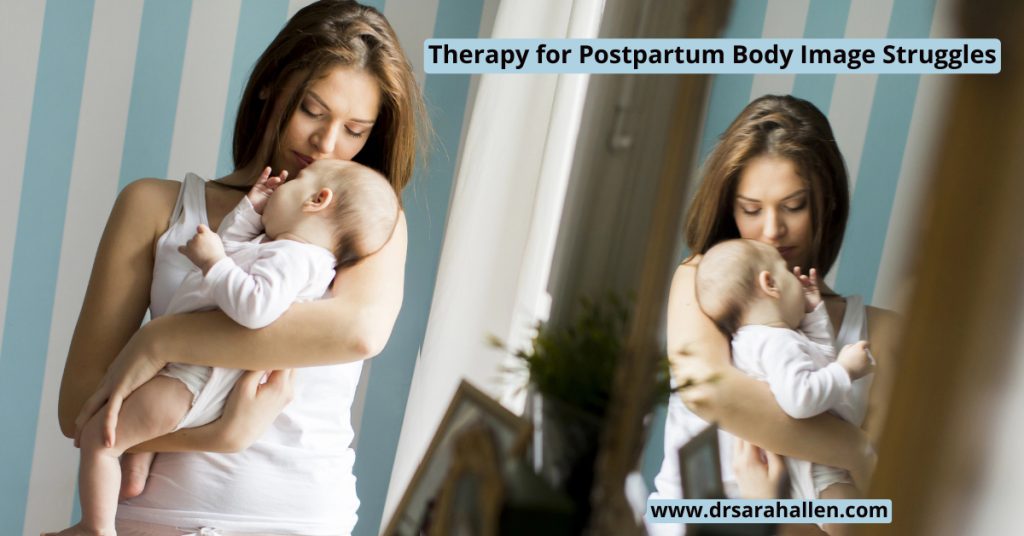
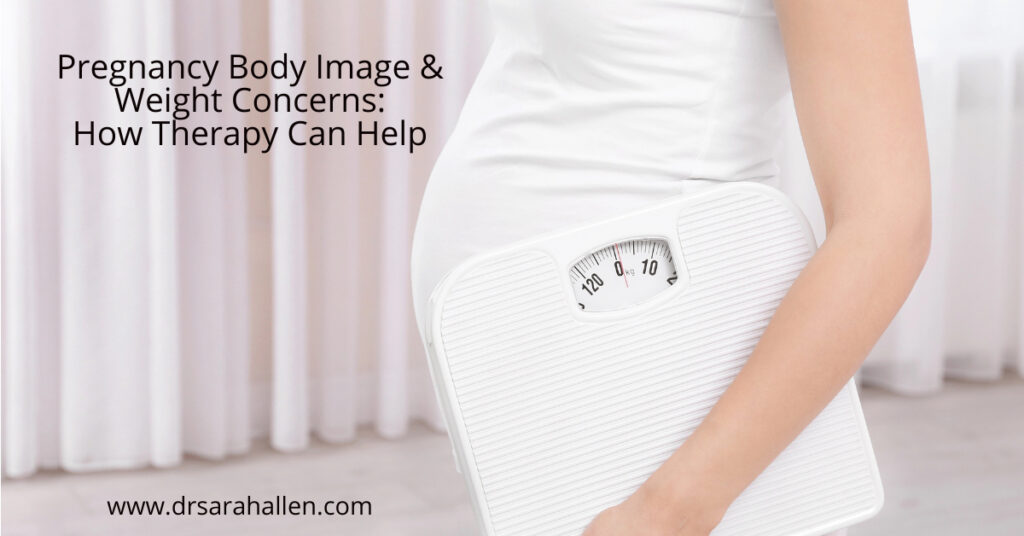
After giving birth, many women experience waves of unexpected emotion. Beyond the sleepless nights, feedings, and learning how to care for a new baby, there is often a less obvious struggle happening under the surface. Postpartum body concerns can sneak in and layer more stress onto an already stressful time. Sometimes, looking at your reflection and not recognizing your own body stirs up feelings you weren’t prepared for.
Through my work with new moms, I think that body image issues are much more common than people realize. Even if it isn’t the primary reason a woman comes in to see me, the topic of how her physical changes have impact her emotional well-being is often brought up in sessions.
The Impact of Social Media on Postpartum Body Image
Social media can affect your thoughts, often without you being aware. If you’re browsing through images of toned bodies and seemingly perfect lives after childbirth, you might start to believe your journey should resemble that. However, these pictures typically showcase only the most flattering angles, enhanced filters, and carefully arranged moments. They are not real life.
Here are significant ways social media could be influencing your self-perception:
Unrealistic expectations: The images frequently don’t represent reality. It’s easy to overlook how staged, edited, or selective they are.
Comparison trap: You may start comparing your body with images that aren’t entirely authentic. This can trigger difficult emotions.
Pressure to conform: Seeing so much attention and praise on “snap back” bodies can create a subtle pressure to appear a certain way.
When I’ve worked with clients with this issue, one of my primary recommendations is to be conscious of the social media accounts you follow. Unfollow accounts that cause distress. Seek out genuine, authentic stories instead. This simple step can significantly change what you think about daily.
Societal Bias for Thin People and Its Effects On Postpartum Body Image
There’s a prevalent cultural message that thinness is ideal. The pressure to “lose the baby weight quickly” or “get your body back” can be overwhelming.
Here’s what I often observe:
Cultural pressure: The notion that your body needs to be slim, toned, or appealing to others can dominate your thoughts, even when your focus could be on healing and self-care.
Insensitive people: The pressure that you put on yourself can worsen when others comment on your body, offer unsolicited advice, or express surprise at any changes, as if they’re unexpected.
Postpartum recovery varies for everyone. Your value isn’t determined by whether you return to a particular dress size. I consistently encourage clients to shift their focus from external opinions to what helps them feel stronger and more grounded internally.
Read Being Authentic: Boost Self-Esteem and Reduce Anxiety by Listening to Your Core Beliefs
Adjusting to a Changing Body After Birth
Pregnancy and birth create big changes in your body, but people rarely talk honestly about how it feels to adjust afterward. It is not just about a few pounds gained or lost. Stretch marks, skin changes, and clothes fitting differently can suddenly make you feel like a stranger in your own skin.
I often hear clients say, “I just want to feel normal again,” and external pressure to “get your body back” leaves little room to process what true healing means. It is easy for self-worth to get tangled with appearance during those early postpartum months.
How Body Image Can Heighten Postpartum Anxiety
When you do not feel comfortable in your body, anxious thoughts can build up quickly. The same self-criticism that appears in the mirror often follows throughout the day. Many moms I work with say these thoughts get louder during activities like getting dressed, shopping, or taking photos with their baby.
Sometimes the worry is so strong that it makes women wonder how others see then and they choose not to go outside, or keep comparing themself to others. Some clients have told me they avoided meeting friends or family because they did not want to be seen and thought of as overweight. These types of negative thoughts can of course affect your quality of life.
Reactivation of Previous Body Dysmorphia and Eating Disorders
The postpartum period can revive past body image struggles. The physical changes, weight fluctuations, and unfamiliar reflections can trigger painful memories and emotions you thought were resolved. Here are some indicators that a previous issue might be resurfacing: Discomfort with body changes: Feeling anxious, irritated, or unhappy with how your body looks or feels.
Preoccupation with appearance: A return of old behaviors like frequent mirror checks, skipping meals due to discomfort, or obsessing over food choices. When these feelings arise, suppressing them often backfires.
In my sessions, I assist clients in learning to acknowledge and name their feelings without shame. You’re not regressing. You’re being reminded of past hurts, and you can confront them differently now. You don’t have to navigate everything alone. Sometimes, simply having a non-judgmental space to talk can ease the burden.
Therapy as a Safe Space to Talk About Body Worries
As a therapist, I recognize how the changes in your body during this phase can evoke various emotions—joy, anxiety, self-consciousness, or even sadness for your pre-pregnancy body. My aim is to offer a safe, supportive environment where we can explore these feelings together and help you develop a positive relationship with your body.
In our sessions, we’ll collaborate to process your emotions and thoughts about your body. I’ll assist you in:
Understanding and validating your feelings: It’s acceptable to feel uneasy, fearful, or frustrated about these changes. Together, we’ll explore those emotions.
Discussing the roots: We can delve into past weight issues, eating disorders, or body dysmorphia and how they’re resurfacing and affecting you currently.
Cultivating self-compassion: I’ll guide you in shifting from self-criticism to self-acceptance, helping you value the incredible work your body has done.
Developing practical coping strategies: We’ll explore tools and methods to manage stress, anxiety, or negative self-talk, so you feel more empowered.
Practical Tips for Maintaining a Positive Body Image During Postpartum
There are actions you can take to feel more accepting and kind toward your body during this time. It won’t happen instantly, but small adjustments can start to build a more positive outlook.
Practice self-compassion: Speak to yourself as you would to a close friend. Your body isn’t failing you. It accomplished something amazing.
Limit exposure: If scrolling makes you feel depleted, put your phone down. Even a brief break can soothe your nervous system.
Wear comfortable clothing: You deserve clothes that feel good—not constricting reminders of an outdated beauty standard.
Seek positive role models: Follow people who showcase the genuine and imperfect aspects of postpartum life, not just the curated highlights. This process isn’t about instantly loving every change. It’s about finding more compassion in how you treat yourself.
Reconnecting With the Body Through Self-Kindness
During sessions, I often talk about softening the way you treat yourself. After you have given so much physically and emotionally, your body does not need correcting. It needs care. That starts with letting yourself be gentle.
Here are some simple ways to start:
– Notice what your body has done, like growing a life, healing from delivery, and getting through long nights
– Practice mindful breathing
– Pick clothes that make you comfortable, not clothes that make you squeeze or hide
– Eat meals sitting down when you can and remind yourself that you matter too
When clients focus on what their body has done instead of how it looks, things shift. Emotional weight can feel lighter. The process often involves building self-kindness in small, everyday moments. These are not instant solutions but we will start by reminding you to be kinder and more present for yourself.
Letting Go of Unrealistic Expectations
Whatever social media platform you use, there will always be some sort of staged family photos and unrealistic expectations can hit hard. Those images of calm, put-together moms feel nothing like the raw reality of life with a new baby.
Letting go of perfection does not mean you stop caring. Instead, let’s move the focus from “getting back” to your old body to noticing what feels good right now. Therapy can help you to make space to see what is actually working and where your energy is best spent and to give yourself permission to step away from social accounts that trigger comparison.
Using CBT to Address Body Image & Weight Concerns
Cognitive Behavioral Therapy (CBT) is one approach I use to help clients deal with body image challenges. It’s a useful tool because it emphasizes the connection between your thoughts, feelings, and actions.
Here’s how we might use CBT in our work together:
Identifying unhelpful thoughts: I’ll help you recognize patterns like “I’m not attractive anymore” or “I’ll never feel good about my body again.”
Challenging those thoughts: We’ll work on reframing them into more balanced, compassionate perspectives, such as “My body achieved something remarkable” or “This is a temporary phase of my life”.
Encouraging positive actions: I’ll support you in finding ways to care for yourself—whether that’s through wearing clothes that make you feel good, gentle exercise like walking or practicing mindfulness.
Building resilience: Together, we’ll develop tools to help you navigate societal pressures and rely more on your internal values while ignoring social media or comments about your appearance.
Read How To Manage Pregnancy and Postpartum Anxiety With Cognitive Behavior Therapy (CBT)
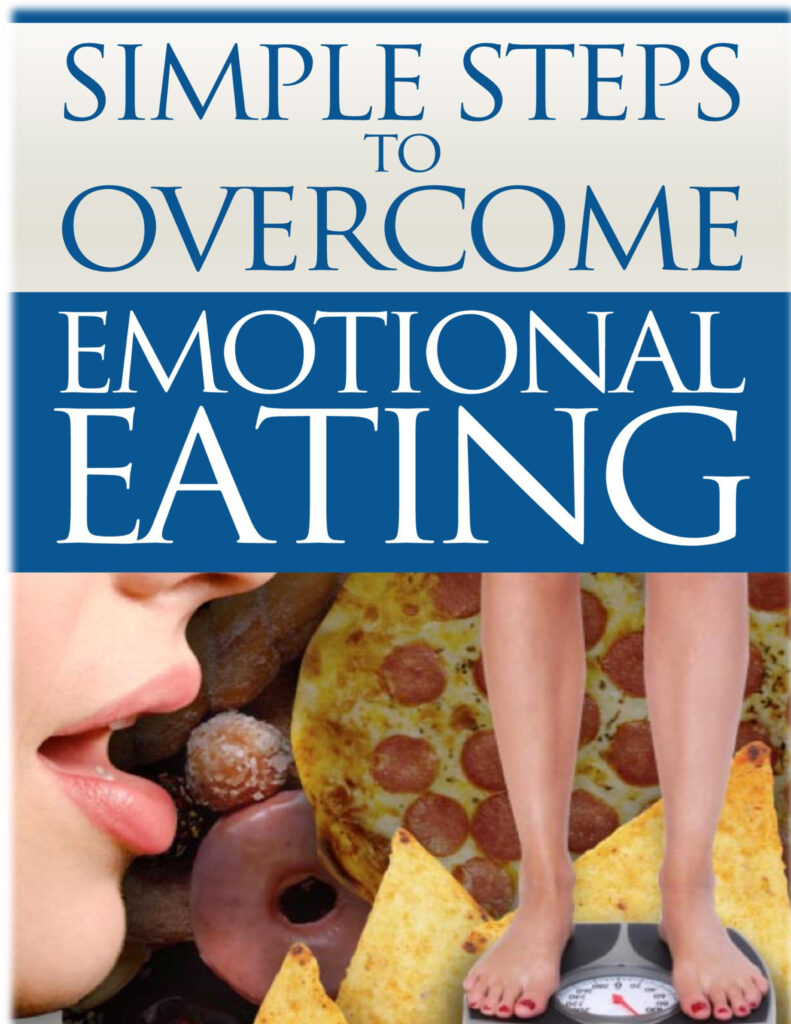
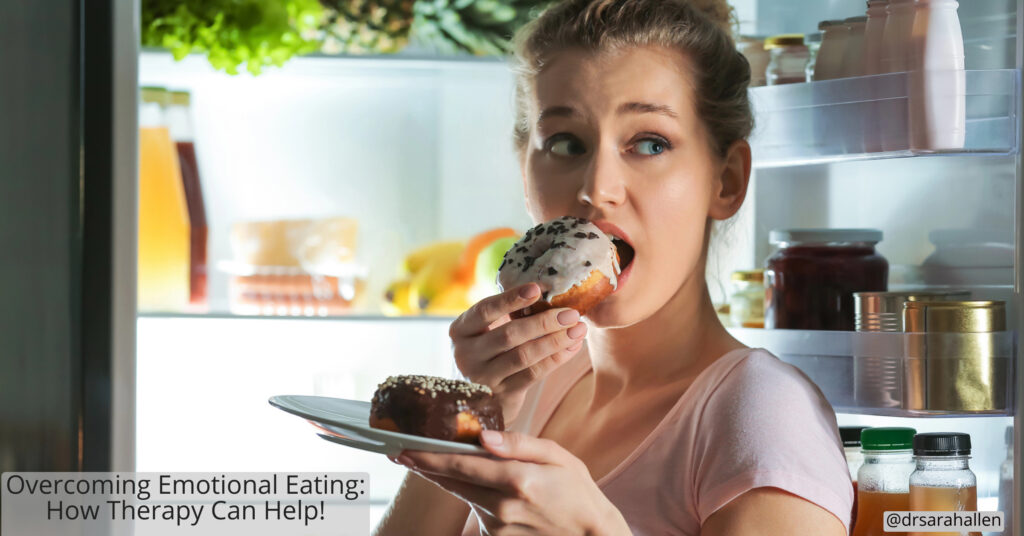
If you would like more general information about emotional eating and weight issues I have a free booklet that you can download from this page Dr. Sarah Allen Counseling For Emotional Eating & Weight Issues.
You can read more of my articles about this topics on my emotional eating and weight issues blog
Finding Peace With Postpartum Changes
It is normal if your body feels unfamiliar. Body image struggles do not equal being ungrateful for your baby or unhappy as a mom. It simply means you are human and your experience is real.
Feeling overwhelmed by postpartum changes can take a toll on your confidence and daily life, especially when anxiety or perfectionism get in the way of how you want to feel. Many of the women I work with share how hard it is to feel at home in their bodies again. Through honest, compassionate conversations, I help you sort through those feelings without pressure or judgment.
Body image is often not the only issue that brings new moms to therapy. I have many years of experience working with postpartum mood disorders and if you’re ready for a space that focuses on you, how you’re feeling, and what matters most to you right now, please read more about postpartum therapy with me.. I see clients in my office in Northbrook, a North Shore Chicago suburb, or virtually across IL, FL and the UK.
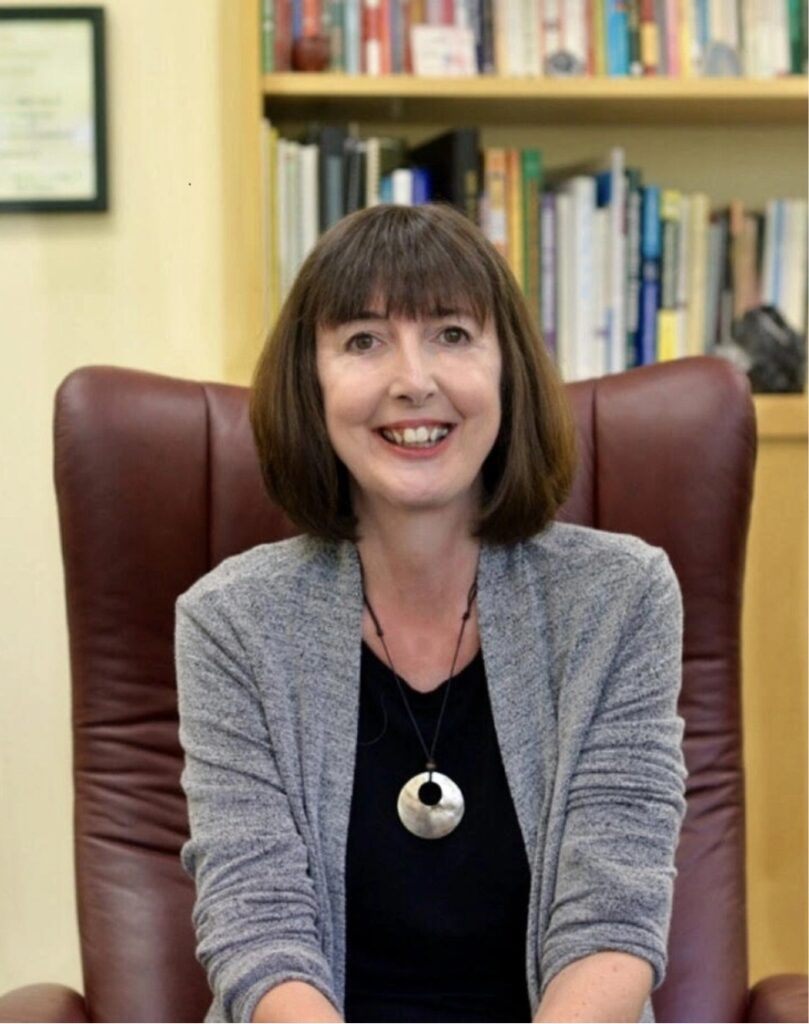
Dr. Sarah Allen has 25+ years of experience in private practice helping women to transition to being the mom they want to be. She is the Founding Director of the statewide non-profit Postpartum Depression Alliance of IL. She also specializes in pregnancy loss & infertility & has published research on postpartum depression and traumatic childbirth.
If you would like to work with Sarah, please phone her at 847 791-7722 or on the form below.
If you would like to read more about me and my areas of specialty, please visit Dr. Sarah Allen Bio. Dr. Allen’s professional license only allow her to work with clients who live in IL, FL & the UK and unfortunately does not allow her to give personalized advice via email to people who are not her clients.
Dr. Allen sees clients in person in her Northbrook, IL office or remotely via video or phone.

What Can I Read That Helps Me While I Am Waiting For My First Appointment With Sarah?
If you feel that you may be experiencing pregnancy or postpartum mood disorder, or worry that you may be at risk of developing it, please download my free booklets below.
See each specific webpage to download one or many.




As featured in