
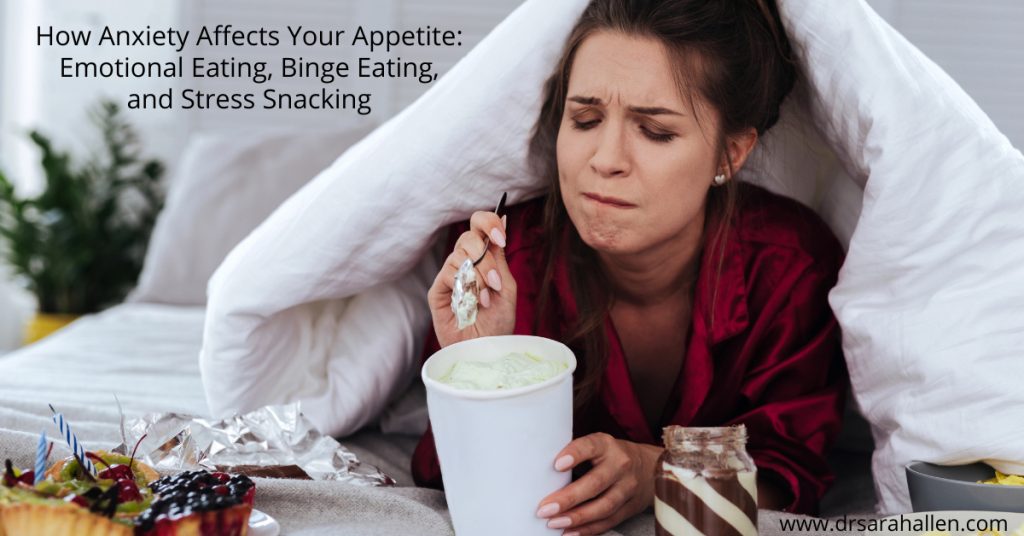
How Anxiety Can Quiet or Intensify Your Appetite
Anxiety can change appetite in two very different ways. Some people feel too nervous to eat and food sounds unappealing when they are worried. Others find themselves eating more than they planned, especially late at night or during busy workdays when stress is high and time is short.
If you fall into the second group, it often leads to self blame and criticism. What you are dealing with is actually a very common brain and body response to stress. I find that understanding what is going on is the first step toward being kinder to yourself and making more effective changes.
In this post, I will explain the difference between emotional eating, binge eating, and stress snacking, how anxiety fits into each pattern, practical strategies you can try, and what treatment with me for emotional eating and related concerns usually looks like.
Key Takeaways
- Anxiety can either suppress appetite or lead to overeating, creating stress and self-blame.
- Emotional eating, binge eating, and stress snacking are different responses to anxiety and stress.
- Understanding how anxiety affects eating makes it easier to be kinder to yourself and start making changes.
- Therapy can effectively address both anxiety and eating behaviors, promoting a healthier relationship with food.
- You don’t have to keep managing stress eating alone, recognizing the pattern and using targeted coping strategies is where change begins.
Emotional Eating, Binge Eating, and Stress Snacking Defined
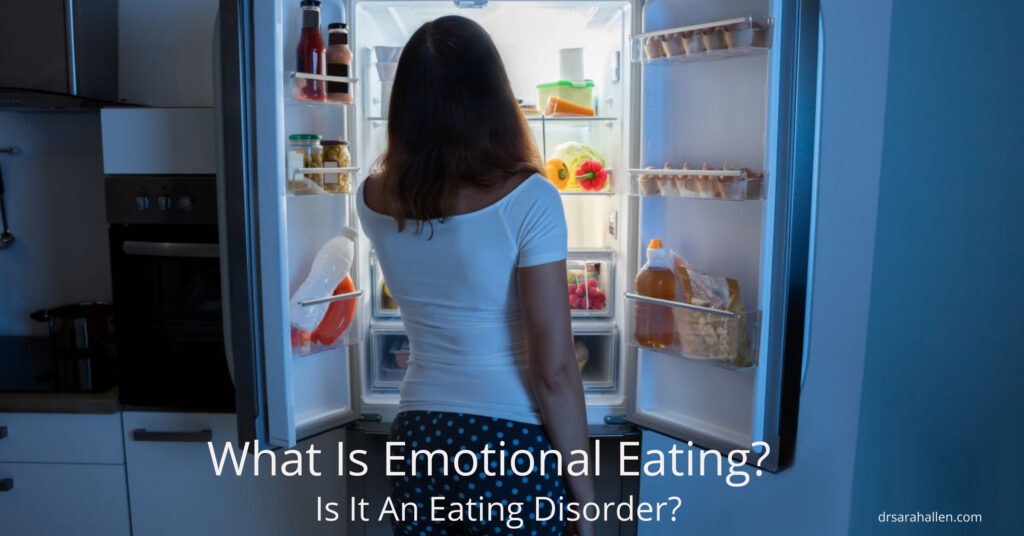
Emotional eating means eating to manage or numb feelings instead of to satisfy physical hunger. The feelings might be anxiety, sadness, boredom, loneliness, or even a vague sense of unease. Emotional eating often looks like:
- Grazing on snack foods in the evening
- Turning to specific “comfort” foods after a hard day
- Eating past comfortable fullness because stopping feels uncomfortable emotionally
The amounts are not always very large. What matters more is the reason for eating and the relief you are hoping food will bring.
Binge eating is different. A binge is an episode where someone eats a clearly larger amount of food than most people would in a similar situation, along with a strong sense of loss of control. During a binge, it can feel almost impossible to slow down or stop, even when you want to. Binge Eating Disorder is a mental health diagnosis that applies when these episodes are frequent, very upsetting, and not followed by regular extreme dieting or purging.
Stress snacking is more subtle. It often looks like:
- Frequent nibbling between tasks or meetings
- Eating while scrolling, working, or helping kids with homework
- Grabbing “just one more” without much awareness of hunger
Stress snacking may not be driven by strong emotions. It is often about tension, habit, or needing a brief break, and the amounts may be small at any one time, but can add up over a day.
How Anxiety Changes the Brain, Hormones, and Appetite
Anxiety sets off the body’s stress response. When your brain thinks there is a threat, it releases hormones like adrenaline and cortisol. Adrenaline can temporarily shut down appetite, which is why some people feel nauseous or “too anxious to eat” during or right after a stressful event.
Cortisol works on a longer timeline. As it stays higher over the day, it often increases cravings for high-sugar or high-fat foods. That is why someone can skip lunch because they were anxious and busy, then find themselves standing in the kitchen at night feeling pulled toward quick comfort foods.
Anxiety also affects brain areas that handle reward and self-control. The reward system lights up at the idea of foods that are fast, tasty, and soothing. At the same time, the prefrontal cortex, which helps with planning and pausing, can be less active when you are stressed. This mix makes it harder to notice what you are doing, think through options, or stop in the middle of emotional eating.
Chronic anxiety can also disrupt sleep and influence blood sugar patterns. Poor or short sleep and long gaps between eating can lead to:
- Stronger cravings for quick energy foods
- Irritability and “wired but tired” feelings
- More emotional eating or stress snacking, even with strong intentions to eat differently
When you understand it this way, it becomes clearer that changing eating patterns is not just about telling yourself to “try harder.” Your nervous system is involved too, and you can learn to work with it rather than against it. If you are interested in more information about how anxiety can affect your brain read Anxiety, The Brain & How Therapy Helps.
Signs Anxiety Is Driving Emotional Eating
It can help to watch for patterns that show food is being used to manage anxiety. Some common signs include:
- Eating when you are not physically hungry
- Strong urges to eat after arguments, stressful emails, parenting struggles, or long days
- Feeling a wave of temporary relief or numbing while eating, followed by guilt or shame
You might also notice emotional and physical cues right before eating, such as:
- Racing thoughts or replaying a stressful moment
- Tight chest, knot in the stomach, or shallow breathing
- Restlessness, pacing, or “wired” fatigue
Afterward, many people describe heaviness, physical discomfort, or harsh self-criticism.
Some red flags suggest the pattern is closer to binge eating than emotional eating or stress snacking:
- Eating very quickly, as if you have to get it in before something stops you
- Hiding food or eating episodes from others
- Feeling completely out of control while eating
- Intense shame or self-disgust afterward
I am sharing these signs as they are information you can track and bring to a mental health professional who understands anxiety and eating concerns. They are not meant for you to diagnose yourself.
Practical Strategies to Interrupt Emotional and Stress Eating
You do not have to change everything overnight. Small steps are usually more helpful. One tool I often teach is a simple “pause and check in” routine.
Before you eat, if you can, try:
1. Rate physical hunger on a 0 to 10 scale, where 0 is extremely hungry and 10 is uncomfortably full.
2. Name the main emotion in the moment, such as anxious, sad, angry, bored, numb.
3. Choose one short, specific action to do before deciding whether to eat.
- Slow breathing for one minute
- Walking around the room or stretching
- Splashing cool water on your face
- Writing down down your thoughts
- Stepping outside or into another room briefly
The goal is to teach your brain that food is not the only response to stress. After your short action, you can ask again, “Am I hungry? What would caring for myself right now look like?”
It also helps to set up your environment to make non-food coping easier:
- Keep a short list of calming ideas on your phone or on the fridge
- Place a small reminder by common “snack spots,” such as a note that says “Pause, breathe, check in”
- Plan regular, balanced meals and snacks to reduce long gaps that lead to intense cravings
No one is going to be able to not reach for food all the time, especially if it has been a long term coping strategy. These steps are about building more choice into moments that currently feel automatic.
What Therapy for Emotional Eating Involves
When emotional eating or binge eating is linked with anxiety, effective treatment usually focuses on both eating patterns and the anxiety underneath. I use Cognitive Behavioral Therapy, mindfulness techniques, and some ideas from Acceptance and Commitment Therapy.
In therapy with me, you and I might:
- Map out your specific cycles: triggers, thoughts, emotions, body sensations, and behaviors
- Notice and reduce black-and-white thinking about food, weight, and control
- Practice skills to tolerate distress without immediately turning to food
I also help you look at what tends to set off your anxiety, such as perfectionism, people pleasing, harsh inner criticism, or big life changes. For many women, pregnancy, postpartum shifts, hormonal changes, or transitions at home and work can all affect appetite, body image, and coping. Those pieces can also be part of my work with you.
Over time, my goal is to help you build a more flexible relationship with food and body cues. The goal is not to never eat emotionally again. It is to feel less controlled by urges, more able to care for yourself, and less stuck in shame/guilt about food.
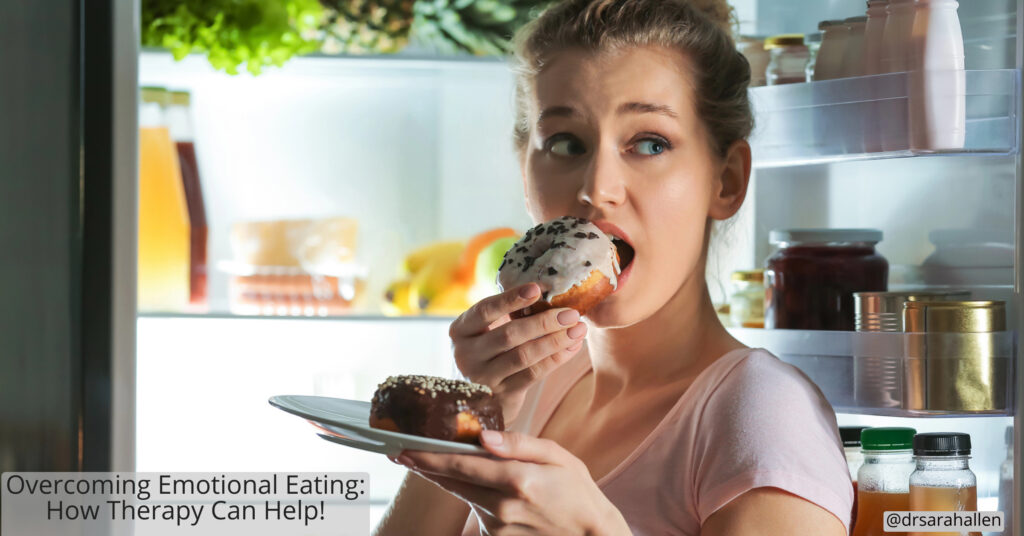
I discuss therapy for emotional eating in more depth in my article Overcoming Emotional Eating: How Therapy Can Help!
Signs It May Be Time to Work With A Therapist
It may be time to reach out to a mental health professional who specializes in anxiety and eating concerns if you notice any of the following:
- Emotional eating or binge eating is happening often and feels out of control
- You change your eating in extreme ways to “make up for” episodes (for example, restriction, overexercising)
- Anxiety about food, weight, or shape is taking up a lot of your mental space
- You avoid social situations because of anxiety about eating in front of others
- You feel ashamed, stuck, or unsure how to change these patterns on your own
If you see yourself in these descriptions, you do not have to keep trying to manage this by yourself. I help people understand the links between anxiety and eating, develop practical coping skills, and create steadier, more compassionate routines around food. Working with someone who understands both anxiety and eating patterns can give you structure, support, and tools that are hard to build alone.
Ready to Feel Less Stuck In Your Relationship With Food?
If you are ready to stop feeling stuck in the cycle of stress, overeating, and guilt, I can help you create lasting change.
My specialized approach to treatment for emotional eating focuses on the underlying emotions, patterns, and triggers that keep you feeling out of control around food.
If you would also like to read more information about treatment for anxiety, I have many anxiety-related blog posts as well as emotional eating blog posts.
At Dr. Sarah Allen Counseling, I work collaboratively with you so you feel supported, understood, and equipped with practical tools you can start using right away. I see clients in person at my office in Northbrook, IL, which is in the North Suburbs of Chicago or virtually across Illinois, Florida or the UK.
Reach out through my contact page, or the form below, to schedule an appointment and begin feeling more at peace with food and yourself.
Frequently Asked Questions About Anxiety, Appetite, and Emotional Eating
A: Anxiety triggers cortisol, which increases cravings for high-sugar and high-fat foods over time. The brain’s reward system becomes more active while the part responsible for self-control becomes less so, making it genuinely harder to pause or stop.
A: Emotional eating involves eating to manage feelings rather than hunger, often in moderate amounts. Binge eating involves consuming a clearly large amount of food with a strong sense of loss of control. Binge Eating Disorder is a clinical diagnosis with specific criteria.
A: Stress eating isn’t a willpower problem, it’s a nervous system response. Therapy helps you understand your specific triggers, build alternative coping strategies, and change the automatic patterns that drive eating, which willpower alone can’t reliably do.
A: Both. When anxiety is driving eating patterns, treating only the eating behavior rarely holds long-term. Effective treatment addresses the anxiety underneath: the triggers, thought patterns, and coping habits that keep the cycle going.
A: If eating episodes feel out of control, are followed by shame or guilt, are affecting your daily life, or you’re restricting food afterward to compensate, those are signs that working with a professional would be worthwhile.

I specialize in empowering you to have the relationship with food that you want, rather than weight and food issues controlling you. If you have any questions, or would like to set up an appointment to work with me, please contact me at 847 791-7722 or on the form below.
If you would like to read more about me and my areas of specialty, please visit Dr. Sarah Allen Bio. Dr. Allen’s professional license only allow her to work with clients who live in IL, FL & the UK and unfortunately does not allow her to give personalized advice via email to people who are not her clients.
Dr. Allen sees clients in person in her Northbrook, IL office or remotely via video or phone.

What Can I Read That Helps Me While I Am Waiting For My First Appointment With Sarah?
Sign up for the Emotional Eating booklet.
Download this free booklet to gain valuable insights and learn practical strategies for managing your relationship with food.


As featured in