
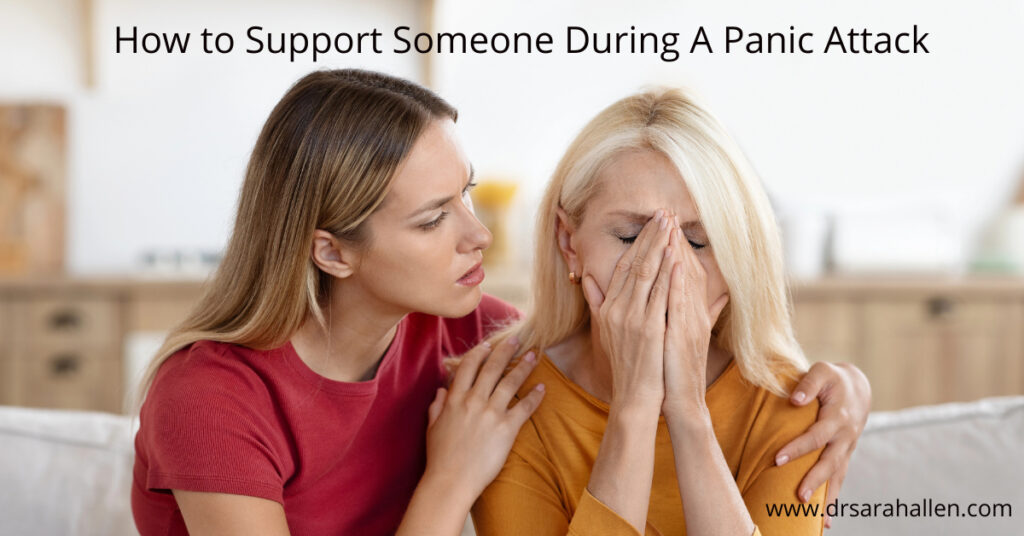
Panic attacks can be frightening and confusing experiences, both for the person going through them and those witnessing it. They often come without warning, leaving the individual feeling overwhelmed by fear, rapid heartbeat, and difficulty breathing.
If you have experienced a panic attack it can cause anticipatory anxiety about it happening again, especially if you are going to be in a similar situation as when the panic attack happened. If you are reading this blog you might be someone who experiences panic attacks or a friend or loved one of someone who has experienced them. I decided to write this article so people who experience panic attacks can share it will people close to them to help them understand what to do to support them. Understanding panic attacks is key so that when they occur, the right kind of support can be offered to help ease the distress.
If you experience panic attacks yourself please read Understanding Panic Attacks & How Therapy Can Help.
How To Help Someone Who Is Having A Panic Attack
Imagine being on a roller coaster and suddenly feeling like you’re trapped mid-air, every nerve on edge and a sense of losing control washing over you. That’s a little glimpse into what a panic attack might feel like. These episodes often confuse people who haven’t experienced one directly. Yet, with a little understanding and empathy, you will have the tools to help someone in the midst or after a panic attack.
Recognizing the Signs of a Panic Attack
To support someone effectively, it’s helpful to recognize the signs of a panic attack. While symptoms can vary, some common indicators include:
– Rapid heartbeat
– Sweating or chills
– Shortness of breath
– Chest pain or discomfort
– Nausea or stomach upset
– Dizziness or feeling faint
– A feeling of choking or smothering
– Fear of losing control or “going crazy”
Recognizing these signs early on can make a big difference. When you pick up on the cues that someone might be starting to panic, you can offer help before it becomes overwhelming. What matters is not trying to diagnose, but just being a calm and steady presence.
What to Say to Someone Having a Panic Attack
Once it’s clear that someone is having a panic attack use a soft, calm voice to help guide them out of the intense moment. Here are some things you might say:
– “I’m here with you. You’re not alone.”
– “Take slow, deep breaths with me.”
– “You’re safe right now.”
Gentle words can bring comfort during an anxious moment. Telling them to “calm down” or “just relax” may feel natural in the moment, but those phrases usually don’t help. They can dismiss what the person is going through. Instead, speak with patience and kindness. Let them know they don’t have to go through it alone.
Actions to Take During a Panic Attack
Your actions can help someone feel safe and supported during a panic attack. Start by creating a calm space. Help them move to a quieter location if possible. Avoid crowds or loud places. When it’s quieter, it’s easier for their body and mind to settle.
One helpful thing to focus on is breathing. Panic attacks often come with fast, shallow breaths. You can say, “Let’s breathe together. In through our nose. Out through our mouth.” Being there and breathing slowly with them can make it less frightening. You don’t need to solve anything right then. Just being calm and steady can bring them a little relief in the moment.
What Not to Do During a Panic Attack
Well-meaning actions can sometimes make things worse. Try to avoid telling someone “It’s all in your head” or “You’re overreacting,” even if you don’t fully understand what they’re experiencing. These comments may lead the person to feel embarrassed or even more anxious. Keep in mind that they’re not choosing to feel this way.
It’s also good not to overwhelm them with too many people around. Being crowded or having several people talking at once can make their panic worse. Step back if needed, and give them enough space to breathe and feel in control, while still being close by in case they need you.
Helping the Person After the Panic Attack
When the panic attack passes, the next few moments matter too. They might feel tired, confused, or embarrassed. You don’t need to have a perfect response. Just showing care with something like, “How are you feeling now?” or “Do you want to talk about it?” shows them they’re not alone and that you care.
If the person experiences panic attacks often, it might be time to gently bring up speaking to a professional. I’ve worked with many people who struggled with panic and anxiety, and therapy gives them a place to learn more about themselves and find tools to manage what they’re feeling and prevent panic attacks happening.
Finding Help For Yourself If You Have Anxiety and Panic
Living with anxiety can feel like you’re constantly waiting for the next wave to hit. Some days feel easy, and others drop in with no warning. I’ve seen the weight it can add to daily life and how tiring it gets to always stay strong. But I’ve also seen how helpful the right support can be. The path through anxiety and panic isn’t about getting rid of every symptom. It’s about understanding what’s happening and building steadiness one step at a time.
Being present during someone’s panic attack can be a powerful act of kindness. Your calmness, words, and simple actions can bring them back to a feeling of safety. If anxiety and panic have become a familiar part of someone’s life, reaching out for therapy can open up a helpful space to begin feeling more grounded.
Navigating anxiety can be challenging, but you don’t have to face it alone. Over the years, I’ve seen how small, steady steps can lead to lasting changes. If you’re looking for ways to manage anxiety and feel more in control, exploring anxiety counseling can be a supportive place to start. For personalized anxiety (or one of the other issues I treat) treatment, contact me, Dr. Sarah Allen. I see clients in my office in Northbrook, a North Shore Chicago suburb, or virtually across IL, FL and the UK.

If you have any questions, or would like to set up an appointment to work with me and learn how to reduce anxiety, please contact me at 847 791-7722 or on the form below.
If you would like to read more about me and my areas of specialty, please visit Dr. Sarah Allen Bio.
Dr. Allen’s professional licenses only allow her to work with clients who live in IL, FL & the UK and unfortunately does not allow her to give personalized advice via email to people who are not her clients.
Dr. Allen sees clients in person in her Northbrook, IL office or remotely via video or phone.

What Can I Read That Helps Me While I Am Waiting For My First Appointment With Sarah?
Download this free booklet to gain valuable insights and practical strategies for managing anxiety and worrying.























As featured in