
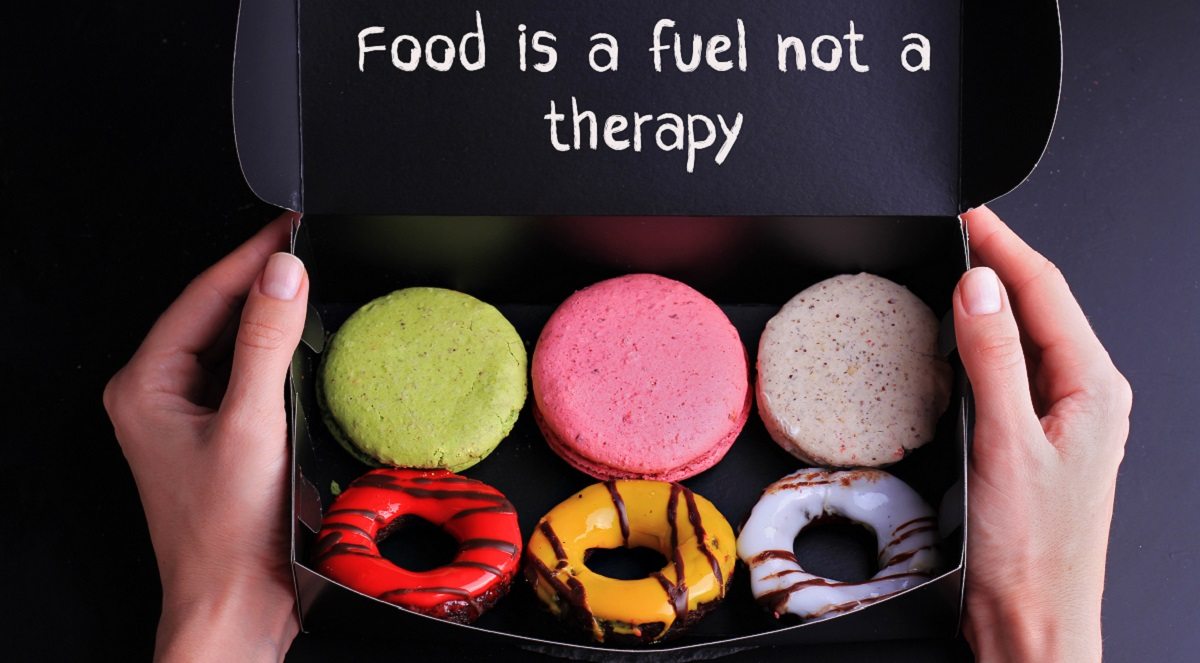
Most people have eaten something they didn’t really want because the day was hard and food was there. It might be chocolate, chips, or whatever happens to be in the cupboard. The food itself almost doesn’t matter. What matters is the feeling that sent you looking for it.
Emotional eating is defined as using food to manage feelings rather than physical hunger. Turning to food to calm down after a hard day is very common. Emotional eating simply means using food to soothe feelings rather than to respond to physical hunger. It often begins as a reasonable way to get through stressful moments, but over time it can turn into a cycle that leaves you feeling physically uncomfortable, guilty, and still not emotionally settled.
Many people use food to manage stress, anxiety, sadness, boredom, or anger. This is not about lack of willpower. Your brain has learned that certain foods bring quick relief, and it repeats what seems to work, even if part of you knows it is not helping in the long run.
Physical hunger builds gradually, is felt in the stomach, and is usually satisfied by different kinds of food. Emotional hunger tends to show up suddenly, with strong cravings for specific foods and a sense of urgency. When emotional eating becomes a main coping strategy, it can affect mood, self-esteem, and health over time.
The good news is that regulating emotions is a learnable skill. Cognitive behavioral therapy (CBT) offers practical tools to understand what is happening in your thoughts, body, and behavior, and to build new ways to soothe frayed emotions without relying on food. In this article, you will learn how to recognize emotional eating, understand the brain and body processes behind it, and practice concrete techniques to calm yourself in kinder, more effective ways. I will also share how I use CBT and related approaches in my work with emotional eating.
Key Takeaways
- Emotional eating means using food to manage feelings rather than physical hunger. It is a learned pattern, not a willpower problem.
- Your brain links certain foods with comfort and relief, which is why the urge to eat when stressed feels automatic and hard to resist.
- Learning to tell emotional hunger from physical hunger is a practical first step toward breaking the cycle.
- CBT offers concrete tools for emotional eating, including thought records, urge surfing, and self-compassion practices.
- Soothing yourself without food is a skill that can be built gradually. Small, consistent experiments with new coping strategies create real change over time.
- If emotional eating is frequent, feels out of control, or comes with significant shame, working with a therapist who specializes in this area can help.
Understanding Emotional Eating and Your Brain
Emotional eating means eating in response to feelings rather than physical hunger. The feelings can be obvious, like stress, anxiety, or anger, or more vague, like emptiness, restlessness, or numbness. Often there is guilt, shame, or self-criticism afterward.
Research on emotional eating shows why food can feel so comforting:
“¢ Highly palatable foods trigger dopamine, the brain’s reward chemical, which briefly improves mood.
“¢ Carbohydrates can increase serotonin, which may feel calming for some people.
“¢ From infancy, many people are soothed with feeding, so many brains strongly link food with comfort and safety.
When you are stressed, your body releases hormones like cortisol. Cortisol tends to increase cravings for processed foods high in sugar or fat. If you repeatedly eat to calm distress, your brain learns: “Feel bad, eat, feel a little better.” That pattern can quickly become automatic.
CBT looks at how thoughts, feelings, physical sensations, and behaviors influence each other. Emotional eating usually sits in the “behavior” part of that cycle, but it is driven by thoughts such as “I cannot handle this,” and sensations like tightness in your chest or knots in your stomach.
Emotional eating exists on a spectrum:
“¢ Occasionally eating for comfort
“¢ Frequent overeating in response to stress
“¢ Binge eating with a sense of being out of control
The ideas in this post can help across that spectrum, but if you are having repeated episodes of eating large amounts of food with strong shame or secrecy, that may be binge eating disorder and can benefit from more structured treatment. In my practice, I often combine CBT with skills for emotion regulation and self-compassion when I suspect binge eating disorder or more severe patterns of emotional eating.
Spotting the Difference Between Physical and Emotional Hunger
Learning to tell physical and emotional hunger apart gives you a small but powerful pause before you eat. Physical hunger usually:
“¢ Builds gradually over time
“¢ Shows up as stomach growling or feeling low on energy
“¢ Is satisfied by different types of food
“¢ Eases when you are comfortably full
“¢ Can be delayed for a short time, if needed
Emotional hunger tends to:
“¢ Come on suddenly with a sense of urgency
“¢ Focus on one specific food or type of food
“¢ Feel like “I need this right now”
“¢ Lead to eating while standing, scrolling, or distracted
“¢ Be hard to stop, even when you feel full or uncomfortable
A few self-check questions can help:
“¢ Where do I feel this in my body? Stomach, chest, throat, jaw?
“¢ When was the last time I ate a balanced meal or snack?
“¢ Besides “hungry,” what am I feeling right now: stressed, lonely, bored, disappointed?
Try inserting a brief pause between feeling and eating. Even 2 to 5 minutes to breathe and notice what is happening starts to weaken the automatic pattern. This is not about judging yourself for eating. It is about becoming more aware, so you can choose what actually fits your needs.
When I work with emotional eating, I often start by helping you track these different types of hunger and your emotional triggers in a simple, non-judgmental way. This creates a clear map of what is happening, so you and I can target the places where new skills will help the most.
Using Your 5 Senses To Soothe Emotions
Self-soothing means offering yourself comfort, care, and kindness, the same care you would extend to someone else on a hard day. One practical way to do this is to think through each of your five senses and identify what genuinely calms you in each category.
It helps to think through this list when you are calm, so you have a ready set of options before the urge to eat arrives. Consider putting together a small collection of your most reliable comforts — a playlist, a candle, a soft throw — somewhere easy to reach. Self-soothing is all about being comforted, nurtured and kind to yourself. We are so much nicer to other people than we are to ourselves. It’s time you were nice to yourself. One way of doing this is to think of ways to soothe each of your five senses: Vision, Hearing, Smell, Taste and Touch.
VISION: Walk in a pretty part of your neighborhood or take a short trip to the nearest beauty spot. Look around at the nature all about you. If you are in a city go to the Art museum and look at beautiful painting. Sit in your garden or if you don’t have one, buy a flower and spend time looking at it and really seeing it’s beauty. If it’s evening time and too dark to see or if you don’t want to go out, light a candle and watch the flame dance or look at a book with gorgeous images.
HEARING:Listening to music is a wonderful way to self-soothe. Some people prefer the natural sounds of the ocean or a waterfall, others associate specific tunes with feeling relaxed. Whatever you are listening to, be mindful, letting the sounds come and go.
SMELL: We all know that certain smells take us back to specific memories. Be aware of what smells bring you pleasure (without hunger or cravings) Notice all the different smells around you. Walk on grass just after it has rain, and breathe in the perfume a loved one wears or smell certain aromatherapy oils such as lavender which have a relaxing quality.
TASTE: Self-soothing without bingeing doesn’t mean you have to stay away from food entirely. When you eat emotionally you probably gulp down the food without really tasting it. Without knowing it, the whole packet of cookies has gone! Use your taste buds and really taste what you are eating. Take minute bites and really chew the food, rolling it around your mouth before swallowing. Eat it slowly, savoring each bite. Drink a soothing drink like herbal tea or hot chocolate. Let the taste run over your tongue and slowly down your throat.
TOUCH: Take a bubble bath (maybe one with a soothing smell, there’s nothing wrong with combining more than one sense). Pet your dog or cat or cuddle a child. Put on an item of clothing that feels soft or smooth silky or perhaps you need the cuddly feel of your favorite over-sized cardigan. Wrap up in a furry blanket or sink into a bed with clean, crisp sheets.
Which of these ideas jump out at you as things you would find soothing? Prepare ahead and stock up and make yourself a treasure trove of comforting things for next time you feel the need to eat emotionally.
Calming Emotions with CBT-Based Tools
Cognitive Behavioral Therapy (CBT) helps you identify unhelpful thinking patterns that drive emotional eating, such as:
“¢ All-or-nothing thoughts: “I blew it, so I might as well keep eating.”
“¢ Harsh self-criticism: “I am disgusting for eating like this.”
“¢ Catastrophizing: “If I feel this anxious, something terrible will happen.”
A simple thought record can interrupt this cycle:
Situation: What was happening when I wanted to eat?
Automatic thought: What went through my mind?
Feeling: What emotion did I notice, and how strong was it?
Balanced thought: What is a kinder, more realistic way to see this?
Another CBT tool is “urge surfing.” Urges rise, peak, and fall, like a wave. The practice is to notice the urge to eat and stay with it, without obeying it right away. You might quietly ask yourself: Where do I feel this urge in my body? How strong is it on a scale of 1 to 10? Then breathe slowly and watch it change over a few minutes.
Self-compassion is also key. Harsh, self-critical inner talk after overeating often triggers more eating. Instead, try speaking to yourself the way you would speak to someone you care about: “I had a hard day; I used food to cope, and I can learn from this without attacking myself.”
You can use a brief CBT-based exercise when you notice emotional eating:
“¢ Pause and take three slow breaths.
“¢ Label the feeling: “This is anxiety,” or “This is loneliness.”
“¢ Identify the thought behind it.
“¢ Choose one small, non-food action that directly fits that feeling, such as texting a friend if you feel lonely or doing a two-minute breathing exercise if you feel overwhelmed.
In our work together I teach these skills step by step and adapt them to your specific patterns. For example, if your emotional eating is mostly linked to evening stress, I will help you build a set of tools and routines aimed specifically at that time of day.
Building a Personalized Non-Food Comfort Plan
Telling yourself to “just stop eating” rarely works, because the emotional need underneath is still there. The goal is not deprivation; it is finding other ways to soothe yourself that actually help.
Creating a personal “comfort menu” can be helpful. You might list options for different emotional states:
“¢ When you are stressed and wired: paced breathing, stretching, a short walk, or a hot shower.
“¢ When you feel sad or low: gentle music, journaling, watching a comforting show, wrapping up in a blanket.
“¢ When you feel lonely: texting or calling someone, joining a support group, sitting with a partner and explaining what feels helpful.
“¢ When you feel bored or empty: a small project, a puzzle, reading a few pages of a book, or stepping outside for fresh air.
Grounding exercises can calm your nervous system quickly. One simple method is the 5-4-3-2-1 technique:
“¢ Name 5 things you see
“¢ 4 things you can touch
“¢ 3 things you hear
“¢ 2 things you can smell
“¢ 1 thing you can taste or imagine tasting
Start with one or two ideas instead of a long list. Notice what actually helps, and give yourself credit for any time you respond to an emotion with something besides food, even once or twice a week. Each of those moments builds a new pattern.
When I work with someone on emotional eating, I often help them design and refine this comfort menu, test it between sessions, and adjust it so it feels realistic and supportive rather than like another set of rules.
Caring for Your Body so Emotions Feel More Manageable
Emotional eating becomes more likely when your physical needs are not met. Irregular meals, going many hours without eating, or skimping on protein can leave you both physically hungry and emotionally fragile. Keeping a predictable pattern of balanced meals and snacks helps stabilize blood sugar, which supports mood and reduces urgent cravings.
Other factors can make you more vulnerable to emotional eating:
“¢ Chronic stress at work or home
“¢ Sleep deprivation
“¢ Hormonal shifts, including pregnancy, postpartum, and perimenopause
Small lifestyle shifts can help:
“¢ Protect a basic sleep window as often as possible.
“¢ Choose gentle, regular movement instead of punishing workouts.
“¢ Build in short “stress resets” during the day, rather than pushing until late at night when food feels like the only reward.
Taking care of physical needs is not indulgent. It is part of creating a steadier base so food is not carrying the full burden of helping you cope. In therapy, I often help you make small, realistic adjustments in these areas, so changes feel doable alongside everything else in your life.
When It Is Time to Get Professional Support
Sometimes emotional eating improves with self-help strategies, and sometimes extra support is needed. It may be time to consider therapy if you notice:
“¢ Frequent episodes of eating until uncomfortably full
“¢ Feeling out of control with food or needing to hide your eating
“¢ Strong shame or self-disgust afterward
“¢ Food and weight taking up a lot of mental space
Emotional eating often travels with anxiety, depression, perfectionism, or people-pleasing. For women, pregnancy, postpartum changes, and other hormonal shifts can intensify emotions and make food feel like an easy, private comfort. Working on these underlying patterns can reduce the need to turn to food.
During therapy for emotional eating, I guide you to map out your patterns, understand your triggers, and learn skills for emotional regulation and mindfulness. I work with you on shifting unhelpful thoughts, practicing new coping tools, and adjusting habits step by step in ways that fit your real life. My focus is not on rigid rules or giving up all foods you enjoy, but on helping you build a more flexible, respectful relationship with both your body and your emotions.
If you recognize yourself in this description and find that self-help tools are not enough, it may be helpful to meet with a therapist like myself who specializes in emotional eating and related concerns. Together, we can take a closer look at what is driving your eating patterns and create a plan that feels manageable and respectful of your needs.
Moving From Food as Comfort to True Emotional Care
Emotional eating is a learned response, not a character flaw. When you see how your thoughts, feelings, and body sensations connect, you can start to respond differently. Awareness of triggers and patterns is the first step, and small, consistent experiments with new coping strategies create change over time.
You do not need to overhaul everything at once. Choose one or two ideas from this post to try this week, such as a short pause before eating or a simple comfort menu item. If you have a lapse, treat it as information rather than proof of failure. Over time, the goal is not perfection with food, but learning how to care for your emotions directly and kindly, so food becomes one part of your life rather than your main way to cope. If you want support with this work, I am here to help you build those skills in a structured, compassionate way.
Take The First Step To Break Free From Emotional Eating
If you are ready to understand the roots of your emotional eating and create healthier patterns, I am here to help you make lasting change. At Dr. Sarah Allen Counseling, I work collaboratively to develop practical tools that fit your real life, not a one-size-fits-all plan. Reach out today through my contact page so we can talk about what support would feel most helpful for you.
The occasional soothing of emotions by comfort eating is fine but when it becomes a regular thing or when you can’t stop eating until you feel so uncomfortably full then we need to talk about other, more healthy ways, of soothing yourself when the day has been really tough.
Q: Why do I keep eating even when I’m not physically hungry?
A: When eating has repeatedly brought emotional relief, however briefly, your brain learns to reach for food automatically in moments of stress, sadness, or overwhelm. This is not a willpower failure. It is a learned pattern, and like any learned pattern, it can be changed with the right tools and support.
A: Physical hunger builds gradually, shows up as stomach growling or low energy, and can be satisfied by different foods. Emotional hunger tends to arrive suddenly, focuses on a specific food or type of food, and often comes with a sense of urgency. After eating emotionally, the underlying feeling usually remains — which is a key sign that food was not what you actually needed.
A: Yes. Cognitive behavioral therapy is one of the most researched approaches for emotional eating because it works directly on the cycle of thoughts, feelings, and behaviors that keeps the pattern going. CBT helps you identify your specific triggers, challenge the thoughts that drive overeating, and build practical alternatives for managing difficult emotions.
A: Evening is one of the most common times for emotional eating because the day’s demands have accumulated and food feels like the only available reward. Helpful strategies include eating enough earlier in the day so physical hunger is not compounding the urge, building a short end-of-day wind-down routine that does not involve food, and identifying what emotion is actually present, often exhaustion, loneliness, or unresolved stress rather than hunger.

I specialize in empowering you to have the relationship with food that you want, rather than weight and food issues controlling you. If you have any questions, or would like to set up an appointment to work with me, please contact me at 847 791-7722 or on the form below.
If you would like to read more about me and my areas of specialty, please visit Dr. Sarah Allen Bio. Dr. Allen’s professional license only allow her to work with clients who live in IL, FL & the UK and unfortunately does not allow her to give personalized advice via email to people who are not her clients.
Dr. Allen sees clients in person in her Northbrook, IL office or remotely via video or phone.

What Can I Read That Helps Me While I Am Waiting For My First Appointment With Sarah?
Sign up for the Emotional Eating booklet.
Download this free booklet to gain valuable insights and learn practical strategies for managing your relationship with food.








As featured in