
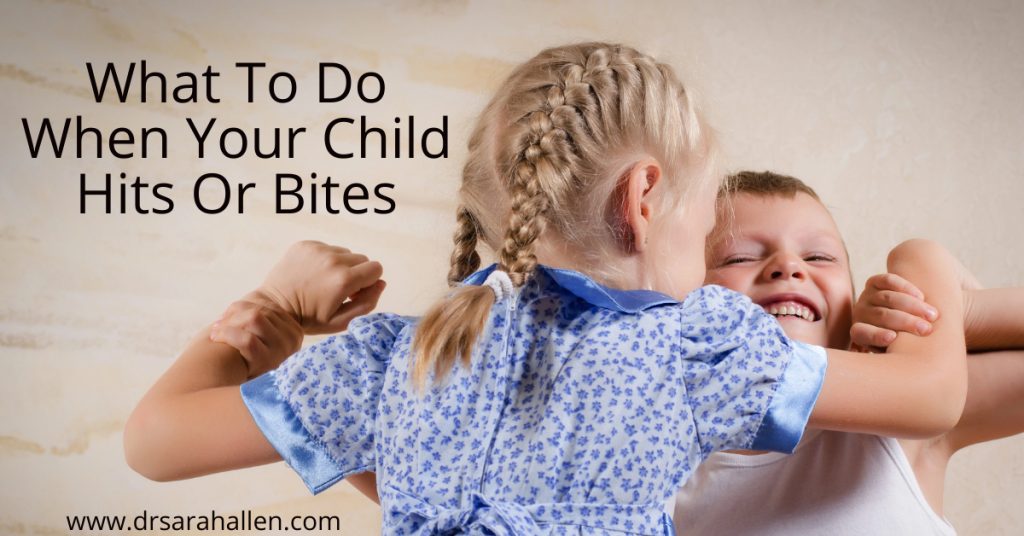
How To Respond When Your Child Hits or Bites
I work with many parents and one of the most common things that parents of toddlers and young children worry about is aggressive behavior such as hitting or biting. It can be frustrating if they hit or bite you, or it might feel alarming, and perhaps embarrassing if your child shows aggression towards other children. It can also trigger self-doubt: “What am I doing wrong?” or “What will other people think?”
In this post, I will cover why hitting and biting happen at different ages, what to do in the moment, how to set firm limits without shaming your child, and how to teach emotional skills that reduce aggression over time. I will also share when it makes sense to get professional help and how my parenting coaching can support you if you feel stuck.
Understanding Why Children Hit or Bite at Different Ages
Aggressive behavior has a reason, even when it looks random. It is a form communication, we just need to figure out what they are trying to let us know.
Typical developmental patterns include:
– Toddlers: Limited language, big emotions, and little impulse control. Hitting or biting often happens when they want a toy, feel scared or overwhelmed, or are exploring cause and effect.
– Preschoolers: More language but still developing frustration tolerance. Aggression is often tied to jealousy, feeling left out, or social misunderstandings with peers or siblings.
– Early school age: Aggression may be more intentional, such as during peer conflicts, anxiety about school, or when school or learning issues are present.
Brain regions responsible for self-control and planning mature slowly over childhood. Temperament matters, too. Children who are more sensitive, more active, or slower to adapt to transitions may have a harder time calming down once upset.
Some children also struggle more because of anxiety, sensory sensitivities, or developmental differences. They may feel “on edge” more often, and hitting or biting can become a fast way to say “back off” or “pay attention to me.” With grade school age children difficulties with emotion regulation and executive functioning can be linked with higher rates of aggressive behavior.
Taking into account all these factors are why a one-size-fits-all approach rarely works. In my parenting coaching, we will discuss your child’s developmental stage, temperament, and the situations that trigger aggression, then I will help you match your responses to what your child needs.
What to Do in the Moment When Your Child Hits or Bites
In the moment, priorities are simple: safety first, then calm, then teaching.
A basic step-by-step response to biting or hitting can look like this:
– Step in quickly and gently separate children or block the hit or bite if you can.
– Get down on your child’s level and use a firm, calm voice: “I will not let you hit. Hitting hurts.”
– Keep your words short and clear, especially with toddlers. Long lectures do not stick when a child is flooded with emotion.
Children respond to your emotions. When you yell or alarmed, your child often escalates instead of settling. Your steady tone and body language are powerful modeling tools.
Sometimes a brief time apart can help, but it should be:
– Calm and predictable, not angry or shaming.
– Short and adjusted to age.
– Framed as a chance to calm bodies, not as “You are naughty, go away.”
Often children calm best when a parent stays nearby with a quiet presence, a gentle hand on the back, or guided slow breaths. Age and temperament matter too of course. In parenting coaching, I help you identify what works best for your child and practice these responses until they feel natural.
Public situations can be especially hard. Many parents feel judged and respond harsher than they want to. When possible, focus on your child’s needs instead of other people’s reactions. Your calm, consistent response matters most.
Setting Clear Boundaries Without Shaming Your Child
Children need clear boundaries to feel safe. The key is to separate the behavior from the child’s identity.
Helpful language might sound like:
– “Hitting is not okay. We don’t hurt others.”
– “Biting hurts. I will keep everyone safe.”
– Instead of “Stop being mean,” try “That was a hurtful choice.”
Consistent rules help children feel less out of control, even when they test limits.
Simple family rules might include:
– Hands are for helping, not hurting.
– Teeth are for food, not for people.
– Feet are for walking, not kicking
Practice these when everyone is calm. Role-play gentle touch or how to walk away. Rehearsal outside of conflict allows children to learn how to deal with difficult feelings. Once a child’s emotions are elevated, they can’t hear you and we have to calm the situation first.
Logical consequences work better than harsh punishments.
For example:
– If hitting happens during rough play, the game stops.
– If your child bites during pretend play, play pauses and you supervise closely.
– If a sibling is hurt, your child helps bring ice or a comfort item, without being forced to apologize before they are calm.
The goal is to connect behavior and consequence in a way that teaches responsibility, not fear. In parenting coaching, I help you create phrases and routines that fit your child’s developmental level.
Be Aware of Your Own Stress
Your stress and history matter, too. If you grew up with yelling, harsh punishment, or feelings being dismissed, your child’s aggression may trigger strong reactions. Many parents describe a cycle of feeling overwhelmed, snapping or yelling, then feeling guilty afterward.
I often help parents slow this cycle down. Ways to support your own regulation include:
– Noticing early warning signs, such as tight shoulders, a racing heart, or instant irritability.
– Pausing on purpose: “I’m feeling really mad. I’m going to take a few breaths so I can help you,” and stepping a few feet away if it is safe.
– Preparing a simple “calm script” so you do not have to think in the moment.
– Building in small breaks during the day, even two or three minutes, so stress does not keep overflowing.
Often, reducing a child’s hitting or biting starts with helping the parent feel less anxious, guilty, or exhausted so consistent responses are possible. In my work, I help parents use simple scripts and routines that make calm responses easier to repeat.
Teaching Emotional Regulation and Better Ways to Express Anger
Emotional regulation means noticing feelings, calming the body, and choosing a safer action. Young children cannot do this alone. They rely on adults as “emotion coaches.”
You can build emotional regulation skills outside of meltdown moments by:
– Naming feelings: “You feel mad that your toy was taken,” or “You look frustrated that it is time to leave.”
– Practicing coping tools: slow “birthday candle” breaths, squeezing a pillow, pushing hands against a wall, or stomping like a dinosaur in a specific “stomp spot.”
– Role-playing words: “Stop,” “No thank you,” “My turn please,” or “I need help” instead of hitting or biting.
Children learn emotional skills through modeling and repetition. When you label your own feelings and coping tools, “I feel annoyed, so I’m taking three deep breaths”, you show your child what regulation looks like.
Preventing Aggressive Behavior Before IT Starts
Prevention starts with noticing patterns. Common triggers for hitting or biting include:
– Fatigue or skipped naps
– Hunger or long gaps between meals or snacks
– Overstimulation from noise, crowds, or screens
– Difficult transitions, such as leaving a fun activity
– Sibling rivalry or feeling ignored
You can reduce these triggers by:
– Keeping predictable routines, with visual schedules for younger children.
– Preparing for transitions with warnings: “Five more minutes, then we put toys away,” and offering small choices.
– Teaching turn-taking and sharing through games when everyone is calm.
– Lowering demands and offering more support when your child is tired, hungry, or overwhelmed.
Tracking when, where, and with whom aggression happens can help you spot patterns. I encourage parents to jot down brief notes or use a simple chart. This is also helpful for creating a specific parenting plan.
When to Seek Professional Help and How I Work with This Issue
My parenting coaching gives you clear, evidence-based strategies you can use right away. We focus on the hardest moments, daycare pick-up, sibling conflict, or getting out the door, and create simple plans. I help you practice calm scripts, choose regulation activities that fit your child, and manage your own anger and overwhelm so your response matches the parent you want to be.
It is time to seek professional help when:
– Aggression is frequent and intense and does not improve despite consistent strategies.
– Your child or others are getting hurt.
– You see additional problems with sleep, mood, anxiety, school, or friendships.
– You feel scared of your child’s outbursts or constantly on edge at home.
I work with parents of toddlers, preschoolers and older children, rather than working with children directly. I help you understand patterns, identify triggers, and respond in ways that support calmer behavior and a more connected relationship.
In our first meeting, I will ask about your child’s developmental history, temperament, routines, and what tends to set off hitting or biting. I also ask about your stress level, support system, and how you were parented, because these shape your reactions now. I do not diagnose or formally assess conditions such as ADHD or autism, but if I notice signs that could benefit from a specialist’s evaluation, I will discuss this with you and help you think through next steps.
Aggressive behavior can change. With calm, consistent limits, active teaching of emotional skills, and support when needed, most children learn safer ways to express big feelings and home life becomes more predictable and less stressful.
Take the Next Step Toward More Confident Parenting
If you are ready to feel more grounded and effective in how you handle daily challenges with your child, my parenting coaching can give you practical tools that fit your family. I focus on strategies that reduce stress for both parents and kids so home feels more connected and predictable. Reach out to me today on the form below to schedule a time to talk about your concerns and goals. I can help you create an individualized plan so you feel more confident in your parenting. I see clients in person in my office in Northbrook, a North Shore Chicago suburb, or virtually across IL, FL and the UK.

Parenting is tough and I am here to help you to be the parent you want to be. If you have any questions, or would like to set up an appointment to work with me, please contact me at 847 791-7722 or on the form below.
If you would like to read more about me and my areas of specialty, please visit Dr. Sarah Allen Bio. Parenting coaching is not covered by health insurance because insurance only covers mental health diagnoses. Dr. Allen’s professional license only allow her to work with clients who live in IL, FL & UK and unfortunately does not allow her to give personalized advice via email to people who are not her clients.
Dr. Allen sees clients in person in her Northbrook, IL office or remotely via video or phone.

What Can I Read That Helps Me While I Am Waiting For My First Appointment With Sarah?
One issue that I find comes up again and again is how to handle discipline and arguments within the family. So I put together a booklet with some strategies I am always saying to my clients to help them begin to improve their relationship with their child and reduce the amount of shouting, arguing and tantrums that can occur. I hope that you will find it helpful too.






As featured in