
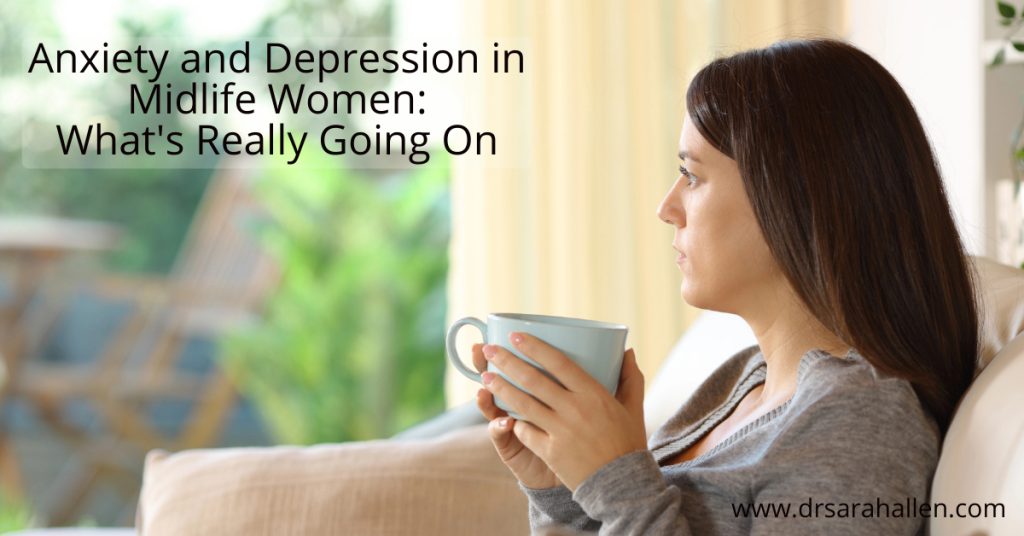
When Midlife Feels Heavier Than It “Should”
I work with many women in their 40s, 50s, and early 60s who experience a mix of anxiety and depression symptoms that are more common in midlife women than they realize. Your life can look fine to everyone around you yet feel very different on the inside. You might not be able to pinpoint what is wrong, and yet it can feel like you are carrying a weight that no one else can see.
At this stage of life, many women are spinning several plates at once. You might be managing work demands, parenting teens or young adults, helping with grandchildren, caring for aging parents, or dealing with relationship changes and health shifts. Each piece seems manageable on its own, but together they quietly build pressure.
Anxiety and depression often overlap in midlife, which can make it hard to tell what is actually going on and what kind of help would be most useful. In my women’s counseling services, I often help women untangle this overlap so they can feel more in control and less overwhelmed by their own thoughts and emotions.
Key Takeaways
- Many women in midlife experience anxiety and depression symptoms that often overlap, this combination is common and well-documented in research.
- Anxiety can manifest as constant worrying, irritability, and sleep issues, while depression can show up as low mood, fatigue, and emotional disconnect.
- Hormonal shifts during perimenopause and menopause affect mood-regulating brain chemicals like serotonin and GABA. This contributes to mood swings and increased anxiety, exacerbated by life stressors.
- Counseling can help untangle these feelings by identifying triggers, understanding patterns, and applying evidence-based strategies.
- Tracking sleep, mood, and energy can reveal patterns worth bringing into counseling.
- Seeking professional support becomes essential when self-help isn’t enough, especially if symptoms affect daily life or responsibilities.
How Anxiety and Depression Show Up in Midlife Women
Anxiety in midlife does not always look like a classic “panic attack.” It can be much quieter but still exhausting. Anxiety might show up as:
- Constant “what if” worrying that will not turn off
- Restlessness or feeling keyed up, even when you are tired
- Irritability and snapping at loved ones
- Trouble sleeping or waking up at 3 a.m. with your mind racing
- Tightness in your chest, shallow breathing, or stomach issues
Depression in midlife can also be hard to spot. You might notice:
- Low mood or a heavy, dull feeling
- Loss of interest in things you used to enjoy
- Fatigue or feeling like everything takes more effort
- Feeling emotionally “flat” or disconnected
- Changes in sleep or appetite, including emotional eating
- Trouble concentrating or finishing tasks
- Harsh self-criticism, guilt, or feeling like a burden
How Hormones and Life Stress Fuel Anxiety and Depression in Midlife
During perimenopause and menopause, levels of estrogen and progesterone shift up and down before they settle. These hormones interact with brain chemicals related to mood and anxiety, such as serotonin and GABA. When hormone levels change, those brain chemicals can feel less steady, and that can show up as mood swings, irritability, worry, or sadness.
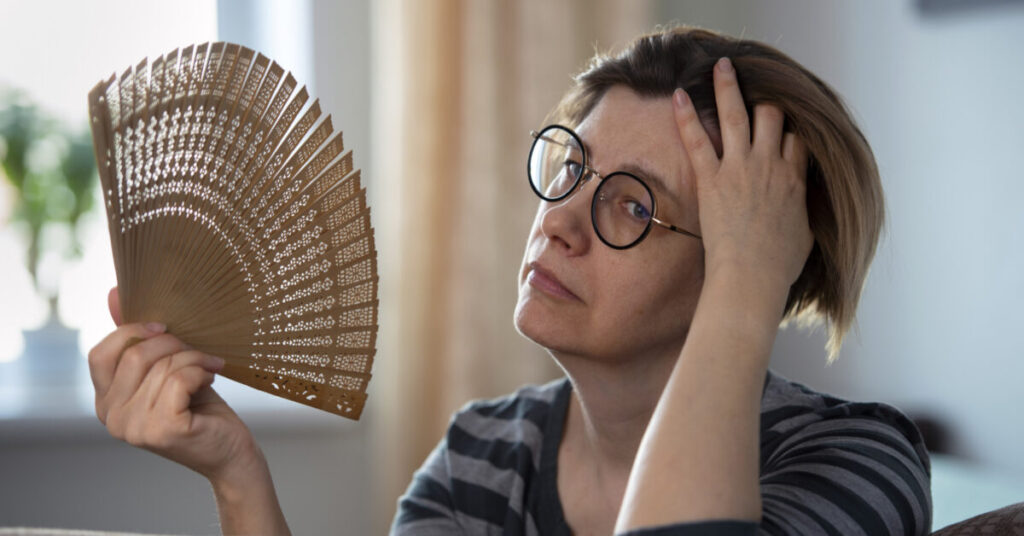
Physical symptoms also play a big role. Sleep problems, hot flashes, and night sweats can:
- Break up your sleep so you never feel fully rested
- Increase irritability and lower your stress tolerance
- Make it harder to think clearly and make decisions
- Feed both anxiety and depression over time
Chronic stress from work, relationships, health concerns, and caregiving can “sensitize” your nervous system. When your body stays in a higher alert state for a long time, it becomes easier for both anxiety and depression to be triggered by smaller things. You might find yourself reacting more strongly than you expect, and then judging yourself for it.
Current research suggests that midlife is a vulnerable window for first-time onset or worsening of anxiety and mood symptoms in women. This is not a personal failure. It is a mix of biology, brain changes, and the weight of life stressors all happening at once.
The MGH Center for Women’s Mental Health Study of Moods and Cycles found that midlife women are vulnerable to new onset of depression during the menopausal transition. Further research found that between 15 and 20% of women experience an episode of major depression during perimenopause, with 40 to 60% experiencing sub-syndromal depressive symptoms during this transition.
Many women have “mixed” symptoms. Research published in Menopause (2024) confirms that anxiety and depression frequently co-occur during the menopausal transition. You might feel wired and exhausted at the same time, or swing between anxious spikes and periods of low motivation.
To read more about hormones and mood read How Hormones Can Affect Women’s Mood.
How I Untangle Anxiety and Depression in Counseling
When we work together, one of the first things I do is help you sort out what you are feeling and thinking. We map out:
- When symptoms show up and what triggers them
- How anxiety and depression interact for you
- Where hormones, sleep, health, and stress fit into the picture
Once we understand your patterns, I draw on evidence-based approaches such as cognitive behavioral therapy, solution-focused strategies, and mindfulness-based tools. These are practical methods that help reduce both worry and low mood by changing unhelpful thought habits and building new coping skills.
Because I focus on women’s mental health, our sessions include space to talk about:
- Perimenopause and menopause changes
- Parenting teens or young adults and shifting family roles
- Relationship changes, divorce, or dating after long relationships
- Career stress, job shifts, and questions about “what’s next”
- Caregiving for aging parents or loved ones with health issues
We set specific goals together, such as:
- Calming constant worry and “what if” thinking
- Easing harsh self-criticism and perfectionism
- Improving sleep routines and bedtime thoughts
- Rebuilding motivation and pleasure in daily activities
Anxiety and depression in midlife is rarely something that developed overnight. It is usually the result of biological, genetic, environmental, and psychological influences, sometimes stretching back decades. Understanding where it comes from is part of how I work with you, alongside practical Cognitive Behavioral Therapy (CBT) tools for managing it day to day.
Therapy can help you understand what is happening in your own mind and body, and build skills you can actually use in the middle of a demanding life. The goal is not to “fix” you, but to help you understand what is happening and give you tools that actually fit your life.
Practical Strategies You Can Start Using Today
While counseling offers deeper and more personalized support, there are small steps you can start now.
First, try a simple “name and sort” practice. When a tough thought shows up, ask yourself:
Is this more of an anxious “what if” thought?
Or is it more of a depressed “why bother” thought?
If it is anxious, grounding tools can help to reduce the adrenaline that anxious thoughts can generate. If it is depressed, mood-building actions may be a better fit. Knowing which you are dealing with in the moment can guide your next step.
For anxious moments, try brief grounding techniques like:
- Paced breathing, for example, breathing in for a count of 4 and out for a count of 6
- A 5-senses check-in, naming one thing you can see, hear, feel, smell, and taste
- A 5-minute “pause” ritual between roles, such as sitting in your car before going inside or taking a short walk around the block
For low mood, focus on tiny, scheduled actions that add a bit of connection, mastery, or enjoyment:
- Sending one text to a supportive person
- Doing a simple task you can finish, like unloading the dishwasher
- Stepping outside for a few minutes of fresh air
- Turning on music you like while doing a routine chore
Keep it very small on purpose. When depression is present, huge changes feel impossible and then feed more self-blame. Small steps count.
It can also be helpful to track your sleep, mood, and energy for a couple of weeks. Jot down:
- Bedtime and wake time
- How rested you feel
- Mood ratings, like a 1 to 10
- Notable hormone or cycle changes
This simple tracking can reveal patterns, including possible hormonal influences, and can be very useful to bring into counseling.
When Self-Help Isn’t Enough and It’s Time for Support
Self-help tools are helpful, but they are not always enough. It is important to seek professional support if you notice:
- Frequent crying spells or feeling you could cry all day
- Panic attacks or intense surges of fear
- Feeling unable to manage basic daily responsibilities
- Relying on alcohol, food, or other substances to cope
If anxiety and depression have lasted more than a few weeks, are getting worse, or are affecting work, relationships, or parenting, please reach out to me as specialized therapy for women can provide structure and support that self-help methods cannot offer on their own.
Common Questions About Midlife Anxiety and Depression
It is rarely one thing. Hormonal shifts during perimenopause affect brain chemicals that regulate mood and anxiety. Chronic stress from caregiving, work, and relationship changes can sensitize your nervous system over time. And for many women, midlife brings underlying biological and psychological patterns to the surface that have been building for years rather than decades.
Anxiety tends to show up as worry, restlessness, and physical tension — including the 3 a.m. mind racing that many midlife women describe. Depression is more likely to feel like flatness, fatigue, or loss of interest in things you used to enjoy. Many women experience both, sometimes on the same day. A useful starting point is asking yourself whether a difficult thought is more of a “what if” thought or a “why bother” thought.
Yes. Cognitive Behavioral Therapy has strong evidence for both anxiety and depression, and it is particularly effective when we also look at the underlying roots — biological, genetic, environmental, and psychological — rather than just managing symptoms. When you understand where your anxiety and depression come from, the tools for managing them make more sense and tend to stick.
That depends on the severity of your symptoms and whether hormonal factors are a significant driver. Some women benefit from a combination of therapy and medical support, including hormone therapy discussed with their doctor. I work collaboratively with you and can help you think through what additional support might be worth exploring alongside counseling.
Sometimes, but not always. Hormonal mood symptoms often ease once hormone levels stabilize after menopause, but anxiety and depression that are also tied to life stress, underlying patterns, or longer-standing vulnerability may not resolve on their own. This is part of why understanding what is driving your specific symptoms matters, it helps clarify what you can expect to improve naturally and what may benefit from additional support.
Ready to Understand What’s Really Going On?
If you are ready for support that understands the unique challenges women face, my women’s counseling services can help you understand what you are experiencing and respond to it differently.
When you first meet with me, we talk about your history, current stressors, health and hormonal factors, and what you most want to change. Together we create a plan that fits your life, whether you prefer in-person counseling in Northbrook or online therapy within Illinois, Florida or the UK.
I work collaboratively with you to reduce anxiety, ease overwhelm, and create practical tools you can use in everyday life. Reach out today through my contact page so we can talk about what you are going through and how I can support your next steps.

I specialize in empowering women to live the life they want. If you would like to work with me, please phone me at 847 791-7722 or on the form below.
If you would like to read more about me and my areas of specialty, please visit Dr. Sarah Allen Bio. Dr. Allen’s professional license only allow her to work with clients who live in IL, IL & UK and unfortunately does not allow her to give personalized advice via email to people who are not her clients.
Dr. Allen sees clients in person in her Northbrook, IL office or remotely via video or phone.

What Can I Read That Helps Me While I Am Waiting For My First Appointment With Sarah?
I have written five other booklets that you might find interesting: Simple Steps To Overcome Depression, Simple Steps To Overcome Emotional Eating, Guide To Pregnancy & Postpartum Issues, Simple Steps To Overcome Anxiety, and How To Stop Arguing With Your Child.
See each specific webpage to download one or many.










As featured in